Interested in a Similar Solution?
Tell us about your product and capacity — we will prepare a tailored proposal for your application.
Ask About This Solution →Baby cabbage and similar leafy vegetables have a harvest window of just a few days. Loads are sent from the field to collection points cart by cart, with people and vehicles waiting. When pre-cooling is slow, everything downstream—loading and dispatch—is slow too.
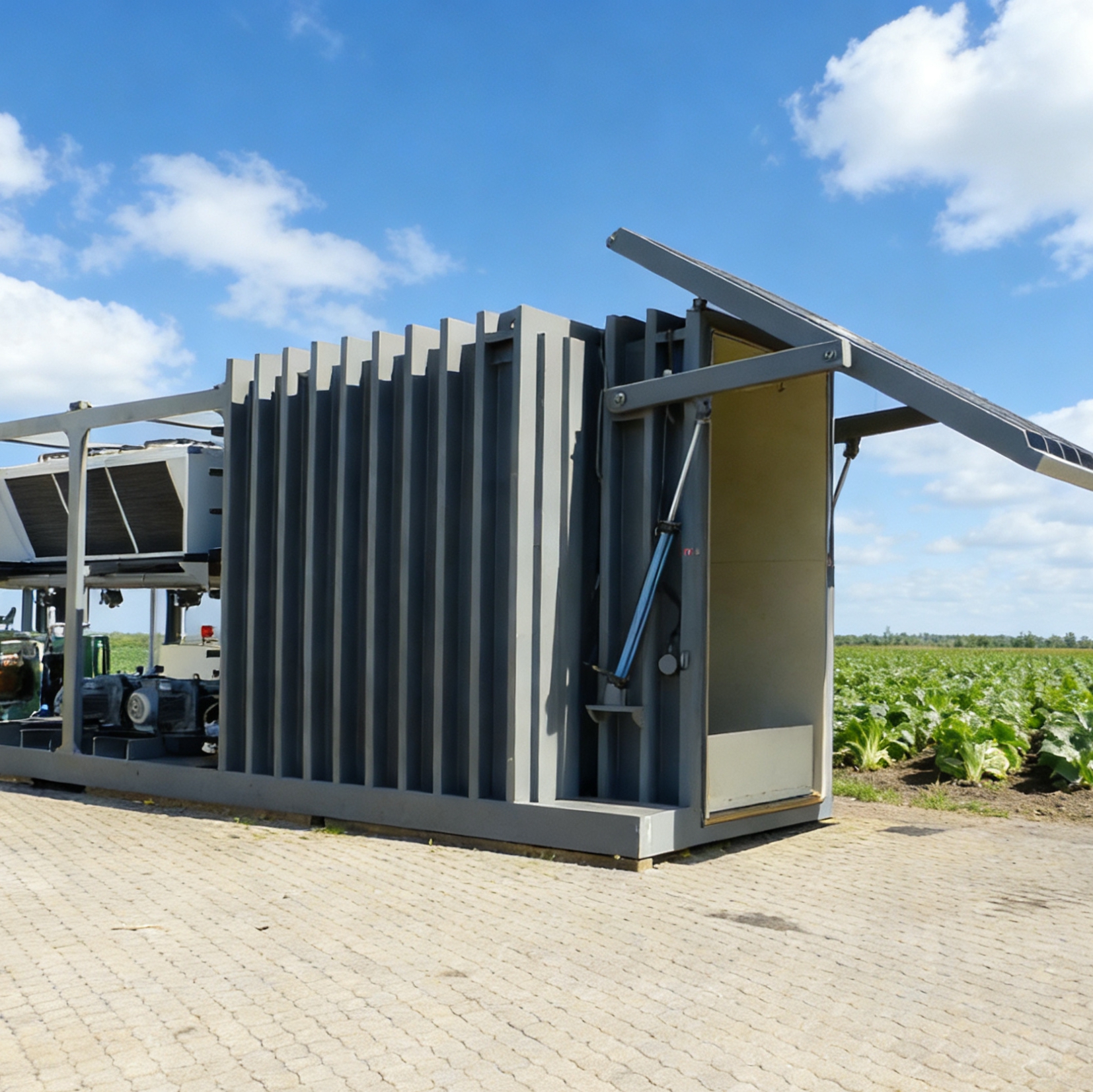
The equipment finally specified for this Lanzhou project is somewhat unusual: not a single large chamber, but two vacuum chambers side by side, each with a hydraulic flap door. The 8-pallet, 4000 kg per-batch volume is split across two slots.
Project Background
The project is in Lanzhou, Gansu. The customer is engaged in vegetable procurement and origin shipping, with baby cabbage as the main product handled. After harvest-season goods arrive, they are packed into baskets, loaded onto pallets, pushed into the pre-cooling chamber, cooled to the target temperature, and then loaded for dispatch. The actual “cooling” period is only one link; loading, unloading, and pallet transfer also take time.
The customer wanted a system that could handle a continuous inflow of goods: sufficient per-batch capacity, a stable cycle, and no bottlenecks in loading and unloading.
Site Challenges
Dense stacking, tight loading. After baby cabbage is packed into baskets and loaded onto pallets, it is stacked densely, and the air channels inside the chamber are already narrow. With forced-air cooling, the outer layer cools first while the inner layer is still warm; a batch comes out with uneven temperatures, which causes disputes later during cold storage and loading.
Batches must connect. With a single chamber, loading cannot happen during vacuum pumping, and loading/unloading cannot happen during pumping. At 4000 kg per batch, loading and unloading alone take time, during which the equipment sits idle.
Narrow end-temperature range. Leafy vegetables are not better the colder they get. The 2–10°C range must be held steadily; drifting outside it causes both product loss and appearance problems.
Solution and Configuration
The project uses one CVF-4000-8P fruit and vegetable vacuum pre-cooler, a dual-slot 8-pallet structure with a per-batch capacity of 4000 kg.
| Item | Configuration |
|---|---|
| Equipment model | CVF-4000-8P (dual-slot 8-pallet / 4000 kg per batch) |
| Product handled | Baby cabbage |
| Chamber internal dimensions | L5200 × W2500 × H2200 mm (approx. 28.6 m³) |
| Chamber structure | Dual-slot, carbon steel vacuum chamber, hydraulic flap doors ×2 |
| Total cooling capacity | 240 kW (206,400 kcal/h) |
| Refrigeration compressor | Bitzer CSH8563-125 (76.2 kW) |
| Vacuum pumps | Busch RA302D 15 kW ×2 + Roots pump ZJ600 7.5 kW + Nash 2BE1203 water-ring pump 37 kW |
| Condensing method | Evaporative condenser (7.7 kW) |
| Ultimate vacuum | ≤600 Pa |
| Operating power / max current | 128.4 kW / 300 A (400 A breaker recommended) |
| Equipment weight | 16,500 kg |
| Power supply | 380V / 50Hz / 3P |
| Control system | LS microcomputer control + Weinview HMI |
The three pump types divide the work; they are not there to make up numbers. The water-ring pump roughs out first, removing the bulk of the air in the chamber; it tolerates moisture well, and leafy vegetables are humid right after entering the chamber, so this stage is left to it. Once the vacuum level enters the low-pressure range, the rotary-vane pump takes over for fine pumping. The Roots pump speeds things up in the low-pressure stage, boosting the pumping rate. The goal is to pull the chamber pressure down below 600 Pa quickly—the lower the pressure, the lower the boiling point of water, and the more efficiently moisture in the product vaporizes at low temperature and carries heat away.
The vaporized water is condensed by the moisture trap, and the refrigeration system moves the heat out of the chamber. The 240 kW cooling capacity is matched to this link: if the moisture trap temperature cannot be held down, the vacuum level cannot be maintained, and cooling stalls at some intermediate temperature that no amount of extra time will get past.
For equipment details, see the fruit and vegetable vacuum pre-cooler product page.
What the Dual Slots Solve
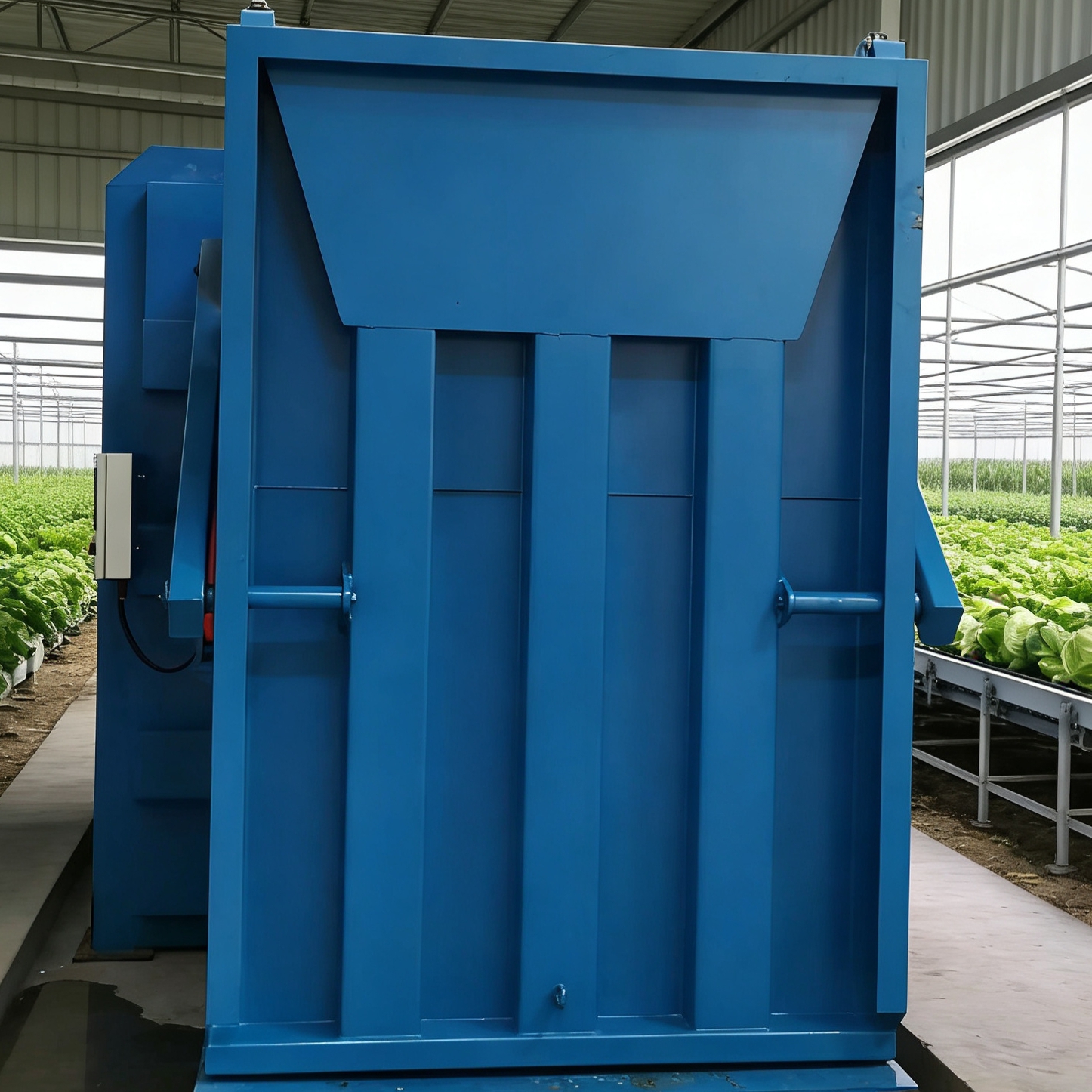
Two chambers, two hydraulic flap doors, each drawing vacuum independently.
It runs like this: while slot A is pre-cooling, slot B opens for loading; when slot A finishes and unloads, slot B closes and starts pumping. Loading and unloading are hidden inside the other slot’s cooling cycle, so the equipment does not have to stop and wait for people.
For an origin collection point that runs several rounds a day and cannot fully control when goods arrive, the value of this structure is not peak speed but continuity—incoming goods do not have to queue for the equipment to free up.
Operating Data
Parameters and cycle stated in the project proposal:
| Metric | Data |
|---|---|
| Per-batch capacity | 8 pallets / 4000 kg |
| Cycle time per batch | 40–45 minutes (baby cabbage) |
| End temperature | 2–10°C |
| Ultimate vacuum | ≤600 Pa |
| Total cooling capacity | 240 kW |
| Operating power | 128.4 kW |
| Equipment weight | 16,500 kg |
For 4000 kg of leafy vegetables, 40–45 minutes is not about being fast; it is about making the process schedulable: what time goods arrive and what time they leave the warehouse can be fixed in advance.
The proposal documents do not record specific values for incoming product temperature and moisture loss for this project; the order confirmation documents prevail. Per-batch capacity and cycle time are the configuration figures given in the proposal; on-site operating data are likewise subject to the delivery acceptance documents.
Root vegetables, berries, and mushrooms are other operating conditions, with different per-batch weights, stacking methods, and end temperatures; configurations must be calculated for the actual product. For other categories, see the customer case collection.
Summary
What is worth noting about this baby cabbage project is not how powerful any single piece of equipment is, but the structural choice: the 4000 kg volume is split across two slots, loading and unloading time is hidden inside the cooling cycle, and “people waiting for equipment” is unlikely to happen.
For sites where the product is leafy vegetables, batches are several tonnes, and arrival times are not concentrated, send us the variety, per-batch weight, incoming temperature, and required end temperature, and we will calculate the configuration for the actual operating conditions—contact us.
Interested in a Similar Solution?
Tell us about your product and capacity — we will prepare a tailored proposal for your application.
Ask About This Solution →