News & Updates
Latest news, industry insights, and technology updates from Yuanxian Machinery — vacuum cooling, freeze drying, and cold chain solutions.
Cold Chain Best Practices: Integrating Vacuum Pre-Cooling into Your Logistics
Step-by-step guide to adding vacuum pre-cooling at the farm or packhouse gate — reducing field heat, matching truck …
Read More❄️ Cold Chain Best Practices: Integrating Vacuum Pre-Cooling into Your Logistics
The Critical Window
Field heat begins degrading produce quality the moment it is harvested. Every hour of delay in cooling reduces shelf life. Vacuum pre-cooling installed at the farm gate or packhouse entrance eliminates this delay.
Integration Workflow
Harvest → Trim/Grade → Crate → Vacuum Pre-Cool → Cold Storage → Refrigerated Transport
↑
30-40 min cycle
Capacity Planning
| Shift Hours | Cycles per Shift | Single 2-Pallet Unit | Single 6-Pallet Unit |
|---|---|---|---|
| 6 hours | 8–9 cycles | 8–9 tons | 24–27 tons |
| 8 hours | 10–12 cycles | 10–12 tons | 30–36 tons |
| 10 hours | 13–15 cycles | 13–15 tons | 39–45 tons |
Based on 30-min cycle + 5-min load/unload per batch.
Layout Considerations
- Position at the receiving dock, before cold storage entry
- Space 10–25 m² per unit, with 2m clearance around equipment
- Water evaporative models need 2–3 m³/day; water-cooled need 3–5 m³/h circulation
- Power 380V/50Hz/3P, breaker sized per model (150A–300A)
Operational Tips
- Stage crates — Pre-load produce onto pallets/trolleys before the unit is free
- Stagger cycles — With two units, load one while the other runs, achieving continuous throughput
- Match truck schedules — Schedule pre-cooling to finish 15 min before loading time
- Monitor core temperature — Use probe sensors, not surface readings
For more information contact sales@vacuum-fresh.com
Central Kitchen Cooling: Why Vacuum Rapid Cooling Outperforms Blast Chillers
For central kitchens producing 1-5 tons of cooked food daily, vacuum rapid cooling cuts cooling time from hours to …
Read More🍲 Central Kitchen Cooling: Why Vacuum Rapid Cooling Outperforms Blast Chillers
The Cooling Bottleneck
In central kitchen operations, the cooling station is almost always the throughput bottleneck. Food safety regulations (HACCP) require cooked food to pass through the temperature danger zone (60°C → 10°C) within a specified time window — typically 2 hours. Blast chillers struggle to meet this at scale.
Vacuum vs Blast Chiller Comparison
| Aspect | Vacuum Rapid Cooling | Blast Chiller |
|---|---|---|
| 90°C → 10°C time | 15–30 min | 2–4 hours |
| Batch size | 50–1000 kg | 20–100 kg |
| Energy per batch | ~5 kWh | 15–25 kWh |
| Floor space per ton/hr | ~3 m² | 8–12 m² |
| HACCP compliance | ✅ Fully compliant | ⚠️ Margin in large batches |
| Cleaning | CIP compatible | Manual cleaning required |
CVF Food Cooler Range
| Model | Batch | Cycle Time | Ideal For |
|---|---|---|---|
| CVF-50 | 50 kg | 12–18 min | Fast food, small kitchens |
| CVF-200 | 200 kg | 15–22 min | Restaurant chains, hotels |
| CVF-500 | 500 kg | 18–25 min | Central kitchens, catering |
| CVF-1000 | 1000 kg | 20–30 min | Large-scale food production |
Implementation Case
A Guangzhou central kitchen producing 10,000 meals/day replaced three blast chillers with one CVF-500:
- Cooling time: 3 hours → 18 minutes per batch
- Throughput: +300% (from 1.5 tons to 6 tons per shift)
- Energy: -60% reduction
- Labor: Reduced from 3 staff to 1 per shift
For more information contact sales@vacuum-fresh.com
The Role of Vacuum Freeze Drying in Pet Food and Functional Foods
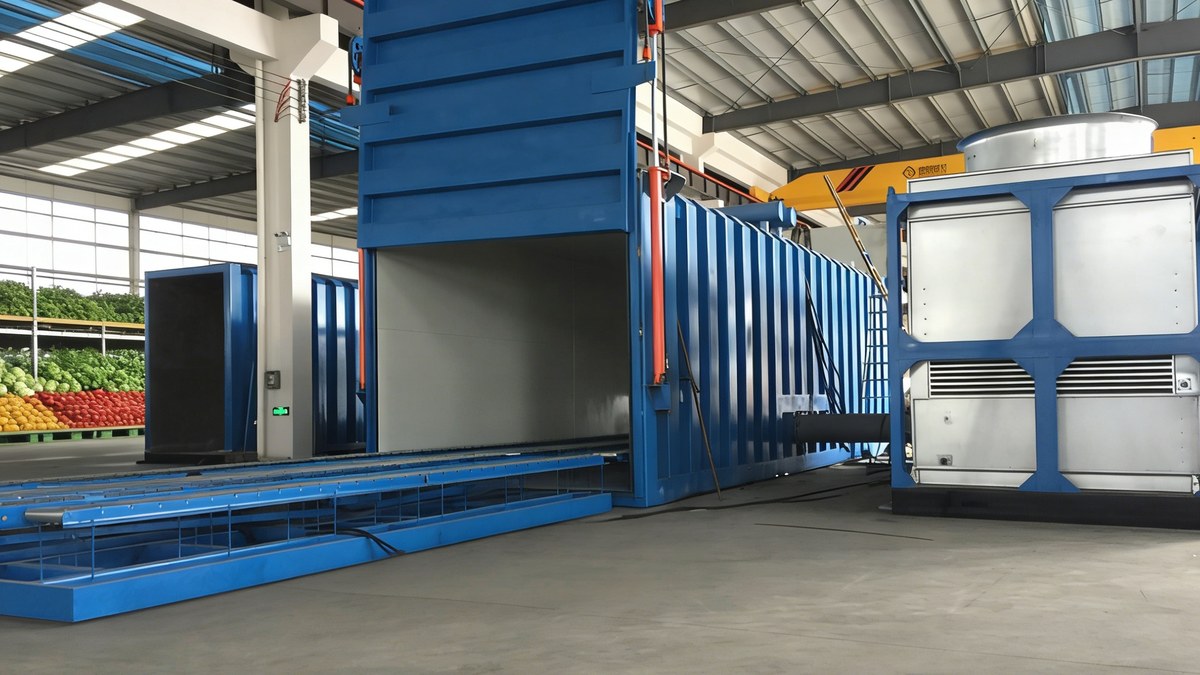
How industrial freeze drying preserves nutrients, texture, and flavor in premium pet food and functional food …
Read More🐾 The Role of Vacuum Freeze Drying in Pet Food and Functional Foods
Beyond Dehydration
Freeze drying is fundamentally different from heat drying. Instead of applying heat to evaporate water, freeze drying sublimates ice directly to vapor under vacuum — preserving cellular structure, nutrients, and flavor that would be destroyed by heat.
Pet Food Applications
The premium pet food market has embraced freeze drying for:
- Raw complete diets — freeze-dried raw patties and chunks retain nutrient profiles without refrigeration
- Single-ingredient treats — chicken breast, beef liver, fish fillets — pure protein with no additives
- Meal toppers — freeze-dried crumbles add flavor and nutrition to kibble
Functional Food Applications
| Category | Product Examples | Freeze Drying Benefit |
|---|---|---|
| Fruit inclusions | Freeze-dried strawberries, blueberries, raspberries for cereals | Retains shape, color, and crunch |
| Probiotic ingredients | Freeze-dried probiotic powders | High survival rate during processing |
| Instant beverages | Freeze-dried coffee, tea extracts | Instant solubility, full aroma |
| Emergency food | Freeze-dried meals for outdoor and survival | 25-year shelf life |
Yuanxian Freeze Drying Solutions
The CVD series (0.4m² to 50m²) covers the full range from R&D to industrial production:
| Model | Area | Batch Capacity | Ideal For |
|---|---|---|---|
| CVD-040 | 0.4 m² | 2–5 kg | R&D, pilot testing |
| CVD-100 | 1 m² | 8–12 kg | Small batch production |
| CVD-1000 | 10 m² | 80–120 kg | Medium production |
| CVD-5000 | 50 m² | 400–600 kg | Industrial production |
For more information contact sales@vacuum-fresh.com
How Vacuum Cooling Extends Shelf Life for Mushrooms and Leafy Greens
Case-backed evidence: vacuum cooling extends mushroom shelf life from 3 to 10+ days and leafy greens from 7 to 14+ days. …
Read More🥬 How Vacuum Cooling Extends Shelf Life for Mushrooms and Leafy Greens
The Respiration-Inhibition Principle
After harvest, produce continues to respire — consuming oxygen, producing heat, and breaking down nutrients. The rate of respiration doubles for every 10°C rise in temperature. Vacuum cooling rapidly removes field heat, slowing respiration before quality loss begins.
Temperature Performance Data
| Product | Initial Temp | Target Temp | Cooling Time | Shelf Life Before | Shelf Life After |
|---|---|---|---|---|---|
| Leafy greens | 28°C | 2–4°C | 20–25 min | 5–7 days | 14+ days |
| Mushrooms | 25°C | 4–6°C | 25–30 min | 3 days | 10+ days |
| Broccoli | 28°C | 2–4°C | 25–30 min | 5 days | 12+ days |
| Berries | 26°C | 4–6°C | 25–35 min | 3 days | 8+ days |
| Fresh flowers | 28°C | 4–8°C | 20–30 min | 3–5 days | 7–10 days |
Why It Works
- Enzyme activity slows — at 2–4°C, enzymatic browning and softening are dramatically reduced
- Microbial growth stalls — most spoilage organisms grow poorly below 5°C
- Moisture retention — ≤2% water loss vs 6–10% in forced-air means produce stays crisp
- Ethylene production drops — vacuum cooling removes ethylene gas along with water vapor
Practical Results
A mushroom facility using a CVF-1000E vacuum cooler reported:
- 60% reduction in waste from spoilage
- 8 hours → 30 minutes cooling time
- Grade-A yield increased from 65% to 92%
For more information contact sales@vacuum-fresh.com
Vacuum Freeze Dryer — CVD Series Technical Overview (0.4m² to 100m²)
Complete technical overview of Yuanxian CVD series vacuum freeze dryers — 0.4m² to 100m² drying area, batch capacity …
Read More🧊 Vacuum Freeze Dryer — CVD Series Technical Overview (0.4m² to 100m²)
A vacuum freeze dryer (lyophilizer) freezes wet material below its eutectic point, turning water into solid ice. Under high vacuum (≤15 Pa), heat sublimates the ice directly into water vapor, which is captured and condensed by a cold trap, achieving dehydration.
Core advantage: Preserves the original color, aroma, taste, shape, and nutritional content. Reconstitution rate 85–95%. Ambient sealed shelf life 2–5 years.
Process (Three Stages)
| Stage | Description | Temperature | Time | Vacuum |
|---|---|---|---|---|
| 1. Freezing | Water in material → solid ice | +25°C → –55°C | 3–5h | — |
| 2. Sublimation Drying | Ice → water vapor → captured by cold trap | –55°C → +60°C | 12–16h | ≤15 Pa |
| 3. Desorption Drying | Bound water → water vapor → captured by cold trap | +60°C → +120°C | 3–6h | ≤15 Pa |
Cold Trap: –45 to –65°C, captures sublimated water vapor by frosting. Protects vacuum pumps from moisture damage.
Product Range
| Model | Drying Area | Batch Capacity | Load Capacity | Shelf Temp | Cold Trap | Vacuum System | Power | Dimensions |
|---|---|---|---|---|---|---|---|---|
| CVD-040 | 0.4 m² | 4 kg | 3–5 kg | –55~120°C | –45~–65°C | Rotary vane | 2.5 kW | 800×600×1200 |
| CVD-060 | 0.6 m² | 6 kg | 5–8 kg | –55~120°C | –45~–65°C | Rotary vane | 3.5 kW | 900×700×1400 |
| CVD-100 | 1 m² | 10 kg | 8–12 kg | –55~120°C | –45~–65°C | Rotary vane | 6 kW | 2000×700×1700 |
| CVD-500 | 5 m² | 50 kg | 40–60 kg | –55~120°C | –45~–65°C | Dual-stage | 16 kW | 3000×1500×1700 |
| CVD-1000 | 10 m² | 100 kg | 80–120 kg | –55~120°C | –45~–65°C | Dual-stage | 28 kW | 3600×1700×2100 |
| CVD-2000 | 20 m² | 200 kg | 160–240 kg | –55~120°C | –45~–65°C | Combination | 56 kW | 5500×2200×2500 |
| CVD-3000 | 30 m² | 300 kg | 240–360 kg | –55~120°C | –45~–65°C | Combination | 70 kW | 6000×2600×2900 |
| CVD-5000 | 50 m² | 500 kg | 400–600 kg | –55~120°C | –45~–65°C | Roots+Rotary | 100 kW | Custom |
| CVD-10000 | 100 m² | 1000 kg | 800–1200 kg | –55~120°C | –45~–65°C | Roots+Rotary | 180 kW | Custom |
Load capacity calculated at 8–12 kg/m² standard loading density, varies by material density and tray layout.
Six Core Systems
1. Drying Chamber
SUS304 stainless steel, multi-layer heating shelves with stainless steel trays. Each shelf has temperature sensors for real-time monitoring.
2. Cold Trap (Vapor Condenser)
| Parameter | Specification |
|---|---|
| Operating temp | –45 to –65°C |
| Heat exchanger | Coil type (hot-dip galvanized steel / SUS304 tube) |
| Defrost | Hot water spray / Hot gas defrost / Water immersion |
| Function | Captures sublimated water vapor as frost |
3. Heating System
| Method | Principle | Features |
|---|---|---|
| Contact heating (silicone oil) | Heated fluid → pipe pump → shelves → product | ±1°C precision, excellent uniformity |
| Radiation heating | Steam-based radiant heat transfer | Simple construction |
Maximum shelf temperature: +120°C
4. Vacuum System
| Configuration | Models | Ultimate Vacuum | Startup Sequence |
|---|---|---|---|
| Rotary vane | ≤5m² | ≤15 Pa | Direct start |
| Dual-stage pump | 5–10m² | ≤10 Pa | Direct start |
| Roots + Rotary vane | ≥20m² | ≤5 Pa | Backing → auto Roots at 1 kPa |
5. Refrigeration System
- Shared system for cold trap + shelf freezing
- Compressors: Low-temp two-stage piston / Low-temp screw
- Evaporator temp: –35 to –45°C
- Cold trap coil: –65°C achievable
- Refrigerant: R22 / R404A / R507
6. Electrical Control System
- PLC + touch screen HMI (Weintek/Siemens)
- Pre-programmable shelf temperature curves for fully automatic freeze-dry cycles
- Real-time multi-channel temperature data logging with curve display
- USB data export, storage, and printing
Applicable Materials
| Category | Typical Materials | Freeze-Dry Performance |
|---|---|---|
| ✅ Fruits | Strawberries, blueberries, mango, pineapple, banana | Retains shape and color, rapid rehydration |
| ✅ Vegetables | Shiitake mushrooms, okra, corn, green beans | Full nutrient retention, crispy texture |
| ✅ Meat | Beef, chicken, salmon, shrimp | Preserves nutrients, intact structure |
| ✅ Pet Food | Freeze-dried meat treats, raw pet food | High-growth market, excellent margins |
| ✅ Functional Foods | Bird’s nest, snow fungus, probiotics | High value-add products |
| ✅ Herbal Products | Ginseng, cordyceps, royal jelly, reishi | Preserves active compounds |
| ✅ Instant Foods | Soup mixes, instant coffee, congee | Quick rehydration, convenient |
| ✅ Pharmaceuticals | Serum, vaccines, enzymes, bacterial cultures | Long-term bioactivity preservation |
Freeze Drying vs. Other Methods
| Parameter | Freeze Drying | Hot Air Drying | Vacuum Drying |
|---|---|---|---|
| Color Retention | ⭐⭐⭐⭐⭐ | ⭐⭐ | ⭐⭐⭐ |
| Nutrient Retention | ⭐⭐⭐⭐⭐ | ⭐⭐ | ⭐⭐⭐ |
| Reconstitution Rate | 85–95% | 30–50% | 50–70% |
| Shape Retention | Complete | Severe shrinkage | Moderate shrinkage |
| Shelf Life (ambient sealed) | 2–5 years | 6–12 months | 12–24 months |
| Energy Consumption | Moderate | Low | Moderate |
| Processing Cycle | 16–24h | 4–8h | 6–12h |
After-Sales Service
| Item | Details |
|---|---|
| Warranty | 1 year (wear parts excluded), lifetime technical support |
| Fault response | Solution in 8h → on-site within 72h |
| Installation | Remote video guidance for commissioning |
| Spare parts | Genuine parts, long-term supply |
For more information, contact our engineering team at sales@vacuum-fresh.com
5 Critical Cold Chain Precautions for Food Processors
Temperature abuse causes 40% of cold chain losses. Learn how vacuum cooling eliminates the danger zone in under 5 …
Read More🥶 5 Critical Cold Chain Precautions for Food Processors
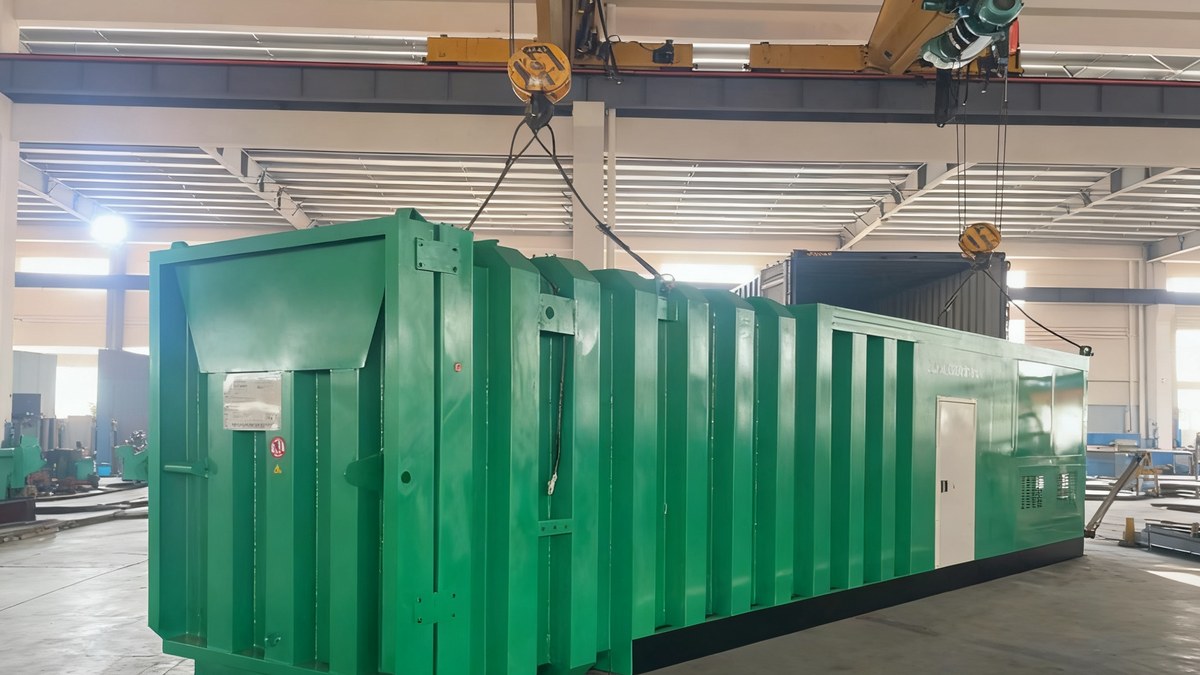
The Hidden Cost of Temperature Abuse
Every year, food processors lose millions to cold chain breaks they never knew existed. 40% of foodborne illness outbreaks trace back to improper cooling (CDC data). The 60–30°C bacterial danger zone sees pathogens doubling every 20 minutes — yet traditional cooling takes 4–12 hours through this range.
The problem isn’t refrigeration. It’s the gap between cooking and refrigeration.
Quick comparison: time through the danger zone
| Method | 90°C → 10°C Time | Danger Zone Exposure |
|---|---|---|
| Cold room | 6–12 hours | 4–8 hours |
| Blast chiller | 2–4 hours | 1–2 hours |
| Vacuum cooling (CVF-200) | 12–15 min | 3–5 min |
Precaution #1: Close the Time Gap — Cool Before You Store
Most processors cook at 90°C+, then tray up and move product to a cold room. By the time the core hits 10°C, 4–8 hours has passed — all in the danger zone.
The fix: vacuum cooling. A CVF-200 food vacuum cooler takes product from 90°C → 10°C in 12–15 minutes. The entire batch is below 10°C before it ever touches the cold room floor.
Real case: A central kitchen in Guangdong reduced their cooling window from 6 hours to 18 minutes with a CVF-300. HACCP audit passed with zero non-conformances.
Precaution #2: Don’t Stack Product for Cooling
Stacking hot product on racks in a cold room creates temperature differentials of 15–20°C between surface and core. The outer layers cool quickly, but the core stays hot for hours.
Vacuum cooling solves this because pressure is uniform inside the chamber. Every piece — surface and core — cools at the same rate. Temperature uniformity across a 200 kg batch is within ±1.5°C.
Precaution #3: Monitor the Cold Chain from the First Minute
Cold chain monitoring often starts after the product leaves the facility. By then, the damage is done. If product enters the cold chain at 40°C instead of 10°C, you’ve already lost 60–70% of shelf life before the truck leaves.
Rule of thumb: Every 2-hour delay in initial cooling reduces shelf life by approximately 1 day.
With vacuum cooling, product enters the cold chain at ≤10°C from minute one.
Precaution #4: Control Moisture Loss the Right Way
| Cooling Method | Weight Loss | Effect on Product |
|---|---|---|
| Cold room (still air) | 3–8% | Dry surface, tough texture |
| Blast chiller (forced air) | 2–5% | Surface dehydration |
| Vacuum cooling | 1.5–2.5% | Minimal, uniform moisture loss |
Vacuum cooling’s 1.5–2.5% weight loss is lower than blast chilling — and uniform, not just on the surface. For cooked meats and bakery, this preserves texture and yield.
Bottom Line
Cold chain safety isn’t about bigger cold rooms or more refrigeration. It’s about closing the gap between cook and cool. If your product spends more than 30 minutes above 30°C after cooking, you have a cold chain break — even if it ends up in a -18°C freezer.
Vacuum cooling doesn’t replace your cold chain. It starts it. At the right temperature. In the right time.
Interested in integrating vacuum cooling into your HACCP plan? Visit www.vacuum-fresh.com for technical specifications and case studies.
Vacuum Cooling vs Forced-Air Cooling: Which Is Right for Your Business?
A detailed comparison of vacuum cooling and forced-air cooling for fresh produce — cooling time, water loss, energy …
Read More⚖️ Vacuum Cooling vs Forced-Air Cooling: Which Is Right for Your Business?
Choosing the right post-harvest cooling method is one of the most impactful decisions a fresh produce business can make. The two most common industrial approaches — vacuum cooling and forced-air cooling — differ dramatically in speed, quality retention, energy consumption, and capital requirements. This article breaks down the key differences so you can determine which technology fits your operation.
Head-to-Head Comparison
| Parameter | Vacuum Cooling | Forced-Air Cooling |
|---|---|---|
| Cooling time (typical) | 30–40 min | 4–8 hours |
| Water loss | ≤2% | 6–10% |
| Energy consumption | 7–9 kWh/ton | 24–30 kWh/ton |
| Uniformity | Excellent — every crate cooled evenly | Variable — depends on box spacing and fan placement |
| Pre-cooling temperature | Field heat removed immediately | Gradual reduction; core stays warm longer |
| Floor space required | Compact (single unit) | Large tunnel/room required |
| Best for | Leafy greens, mushrooms, high-value vegetables | Root crops, fruits, palletized loads |
| Capital investment | Moderate–high | Low–moderate |
When Vacuum Cooling Excels
Vacuum cooling works by lowering the chamber pressure so that water on the produce surface evaporates rapidly, pulling heat away in the process. This gives it a decisive speed advantage:
- Leafy greens and herbs — Spinach, lettuce, cilantro, and parsley lose field heat in under 30 minutes, locking in freshness.
- Mushrooms — Rapid cooling prevents browning and caps from opening prematurely.
- Broccoli and cauliflower — Vacuum cooling removes internal heat that forced air cannot reach.
- High-throughput packhouses — Multiple batches per shift keep the cold chain unbroken.
Vacuum cooling is also the superior choice when product weight retention is a priority. At ≤2% water loss versus 6–10% for forced air, the yield difference alone can justify the equipment cost for high-value crops.
When Forced-Air Cooling Works Well
Forced-air cooling pulls cold air through packed pallets using differential pressure. It is a mature, well-understood technology that suits:
- Root vegetables — Potatoes, carrots, onions are less sensitive to cooling speed.
- Fruits — Apples, citrus, stone fruits benefit from slower, gentler cooling that avoids surface damage.
- Low-volume operations — Lower upfront cost makes forced air accessible for smaller farms.
- Mixed cold storage — The same room can cool and then store product, simplifying logistics.
Making the Decision
| If your priority is… | Choose… |
|---|---|
| Maximum speed and shelf-life extension | Vacuum cooling |
| Lowest per-ton energy cost | Vacuum cooling |
| Product weight retention / minimal water loss | Vacuum cooling |
| Lowest upfront investment | Forced-air cooling |
| Cooling mixed pallets of fruit | Forced-air cooling |
| High daily throughput (>10 tons) | Vacuum cooling |
Both technologies have their place in modern cold chains. For many mid-to-large scale operations serving supermarkets, food service, or export markets, vacuum cooling pays for itself through reduced waste, longer shelf life, and premium product appearance.
For more information contact sales@vacuum-fresh.com
Why Vacuum Pre-Cooling Is the Standard for Fruit & Vegetable Preservation
Why vacuum pre-cooling outperforms forced air, hydro-cooling, and cold storage. Technical data, real case studies from …
Read More🥬 Why Vacuum Pre-Cooling Is the Standard for Fruit & Vegetable Preservation
The 30-Minute Window That Determines Shelf Life
Most produce loses quality not in cold storage, but in the gap between harvest and first cooling. Every hour of delay accelerates respiration, moisture loss, and microbial growth. For leafy greens, this window is measured in minutes — not hours.
Field heat removal is the single most impactful step in the cold chain. Among all pre-cooling methods, vacuum pre-cooling delivers the fastest, most uniform temperature pull-down with the lowest energy cost.
Four Pre-Cooling Methods Compared
| Method | Cooling Time | Uniformity | Energy Efficiency | Water Loss |
|---|---|---|---|---|
| Cold room | 6–12 hours | Poor | Low | No loss |
| Pressure differential | 2–6 hours | Medium | Low | Minimal |
| Hydro-cooling | 20–60 min | Good | Medium | Gains weight |
| Vacuum cooling | 20–40 min | Excellent | High | 1–3% |
Vacuum cooling works on a simple physical principle: at 600 Pa, water on the produce surface evaporates at 0–5°C — pulling latent heat directly from the produce interior. A batch of spinach at 25°C reaches 2°C in 25 minutes.
How It Works in Practice (CVF-1500-3P Reference)
| Parameter | Value |
|---|---|
| Batch capacity | 1,500 kg |
| Cycle time | 30–45 minutes |
| Chamber volume | 11.24 m³ |
| Ultimate vacuum | ≤ 600 Pa |
| Final temp | 0–10°C |
Real-World Installations
Driscoll’s Yunnan Base, China (CVF-2000-4P) — 2,000 kg/batch blueberries and raspberries, 25°C → 2°C in ~30 min. Challenge: 1,900m elevation reduced pump efficiency by ~15%; pumps upsized to compensate.
Mexico Tropical Operation (CVF-3000-6P) — 3,000 kg/batch mixed produce. Ambient 40°C+ required 15–20% extra condensing capacity, solved with evaporative condenser.
Best-Fit Applications
- Leafy greens — 20–25 min. Highest ROI. Water loss 2–3% acceptable.
- Mushrooms — 18–22 min. Preserves white color and firm texture.
- Berries — Requires slow vacuum ramp to keep loss under 2%.
- Fresh-cut flowers — Industry standard for export-grade quality.
FAQ
Q: Does it work for all produce?
Best for high surface-area produce (leafy greens, mushrooms, flowers). Dense produce like potatoes and melons are better suited to forced air.
Q: How much water is lost?
Typically 1–3%. CVF series offers adjustable evacuation speed for moisture-sensitive produce.
Q: Energy cost per batch?
CVF-2000-4P consumes ~20 kWh per batch. At $0.10/kWh, that is ~$2.00 per 2,000 kg.
Q: Lifespan?
Well-maintained systems operate 10–15 years. A CVF-4500-6P installed in Chile in 2014 is still running on original compressors.
Yuanxian Food Machinery — July 2026
Vacuum Precooling: The Science Behind Longer-Lasting Fruits & Vegetables
How vacuum cooling removes field heat from produce in 20-40 minutes. Technical breakdown of pressure, temperature, and …
Read More🥦 Vacuum Precooling: The Science Behind Longer-Lasting Fruits & Vegetables
The Problem: Field Heat Destroys Produce Quality
Freshly harvested fruits and vegetables carry significant field heat. A head of lettuce picked at 30°C ambient arrives at the packhouse at roughly 28°C. Without rapid cooling, that heat triggers:
- Respiration acceleration — every 10°C increase doubles respiration rate
- Moisture loss — transpiration continues unchecked, causing shriveling
- Microbial growth — bacteria multiply exponentially in the 20–40°C danger zone
- Ethylene production — stress ethylene accelerates ripening
Traditional cooling takes 6–24 hours. Vacuum precooling does it in 20–40 minutes.
How Vacuum Cooling Works
Vacuum precooling exploits a basic physical principle: water boils at lower temperatures under reduced pressure.
| Stage | Pressure | Temperature | What Happens |
|---|---|---|---|
| Loading | Atmospheric | 25–30°C | Produce loaded into chamber |
| Evacuation | 1000→660 Pa | 30→15°C | Surface water begins evaporating |
| Cooling | <660 Pa | 15→2°C | Latent heat pulls heat from tissue |
| Holding | ~600 Pa | 2–4°C | Uniform temperature across all produce |
The CVF series reaches ≤660 Pa within 8–12 minutes, and the entire cycle completes in 20–40 minutes.
Measurable Benefits
Shelf Life Extension
| Produce | Room temp | With vacuum precooling | Extension |
|---|---|---|---|
| Leafy greens | 1–2 days | 7–10 days | 4–5× |
| Mushrooms | 2–3 days | 8–12 days | 3–4× |
| Berries | 3–5 days | 12–18 days | 3× |
| Broccoli, cauliflower | 2–3 days | 10–14 days | 4–5× |
| Fresh-cut herbs | 2–4 days | 10–14 days | 3–4× |
Weight Loss Comparison
| Method | Moisture Loss |
|---|---|
| No precooling | 5–8% |
| Cold room (6–12 hr) | 3–5% |
| Forced air (4–6 hr) | 2–4% |
| Vacuum precooling (20–40 min) | 1.5–2.5% |
Additional Benefits Unique to Vacuum Precooling
- Surface drying — Rain-harvested produce enters with surface moisture; vacuum removes it, suppressing post-harvest rot
- Wound healing — Rapid pressure change promotes suberization on small cuts
- Uniform cooling — Every piece reaches same final temperature — no hot spots
Equipment Specifications (CVF-1500A-3P)
| Parameter | Value |
|---|---|
| Chamber volume | 11.24 m³ |
| Batch capacity | 1,500 kg |
| Cooling cycle | 30–45 min |
| Ultimate vacuum | ≤ 600 Pa |
| Cooling capacity | 64 kW |
| Compressor | Copeland 15 kW × 2 |
Market Adoption: Global Standards
In Japan, vacuum precooling is so widespread that un-precooled produce rarely enters the market. Major US retail chains now require vacuum-cooled leafy greens as a supplier specification. Exports of Chinese leafy greens to Hong Kong, Singapore, and the Middle East increasingly require vacuum precooling certification.
Yuanxian Food Machinery | www.vacuum-fresh.com
Fruit & Vegetable Vacuum Cooler — How to Choose the Right CVF Model (500–5,000kg Capacity)
Complete guide to Yuanxian CVF series vacuum pre-coolers — 500–5,000kg per batch capacity, cooling produce from field …
Read More🥬 Fruit & Vegetable Vacuum Cooler — How to Choose the Right CVF Model (500–5,000kg Capacity)
Vacuum cooling is a rapid cooling technology that removes field heat from freshly harvested produce by evaporating surface moisture under reduced pressure (≤660Pa). Yuanxian CVF series vacuum pre-coolers handle 500 to 5,000 kg per batch, cooling produce from 20–35°C down to 0–10°C in 20–40 minutes. The technology is suitable for leafy greens, mushrooms, berries, soft fruits, cut flowers, and most high-moisture agricultural products.
What Is Vacuum Cooling and How Does It Work?
Vacuum cooling relies on a basic physical principle: water boils at lower temperatures under reduced pressure. At standard atmospheric pressure (101.3 kPa), water boils at 100°C. When the pressure inside the chamber drops to ≤660 Pa, water vaporizes at approximately 0–3°C. Each kilogram of water vaporization absorbs about 2,500 kJ of latent heat — drawn directly from the produce itself.
This means vacuum pre-cooling does not rely on cold air blowing across the product surface. Instead, surface moisture evaporates uniformly across every piece of produce, resulting in even cooling from surface to core with no thermal lag.
CVF Series System Architecture
A standard CVF series vacuum cooler consists of five subsystems:
| Subsystem | Function | Core Components |
|---|---|---|
| Vacuum System | Reduces chamber pressure to ≤660Pa, triggering moisture evaporation | Rotary vane vacuum pumps (Leybold / Busch / Daluto) |
| Vapor Condenser (Cold Trap) | Condenses evaporated moisture before reaching vacuum pump, protecting pump oil | Finned-tube condenser (Yuanxian patented design) |
| Refrigeration System | Maintains low condenser temperature and supplements cooling capacity | Compressors (Bitzer / Hanbell / Copeland) |
| Control System | Fully automatic process control | LS (Korea) PLC + Weinview touchscreen |
| Condenser System | Heat rejection — air-cooled, water-cooled, or evaporative | Air-cooled / Shell-tube / Evaporative condenser |
Complete Model Specifications
CVF-500 to CVF-6000 Full Parameter Table
| Model | Pallets | Batch Capacity | Chamber Volume | Cooling Capacity | Total Power | Cycle Time |
|---|---|---|---|---|---|---|
| CVF-500-1P | 1P | 500 kg | 4.3 m³ | 46.9 kW | 29.2 kW | 20–30 min |
| CVF-1000-2P | 2P | 800–1,000 kg | 8.0 m³ | 89.6 kW | 39.9 kW | 25–30 min |
| CVF-1500A-3P | 3P | 1,500 kg | 13.2 m³ | — | — | 25–35 min |
| CVF-2000-4P | 4P | 2,000 kg | 15.7 m³ | 172 kW | 81 kW | 25–30 min |
| CVF-3000-6P | 6P | 3,000 kg | 22.8 m³ | 247 kW | 110.8 kW | 30–40 min |
| CVF-4000-8P | 8P | 4,000 kg | 33.75 m³ | 280 kW | 145 kW | 25–30 min |
| CVF-5000W-10P | 10P | 5,000 kg | 31.46 m³ | 252.2 kW | 99.7 kW | 30 min |
| CVF-6000-12P | 12P | 6,000–6,500 kg | 37.6 m³ | 590 kW | 205 kW | 25–40 min |
Air-cooled, water-cooled, and evaporative condenser configurations available. Parameters based on actual project proposals and engineering calculations.
Condenser Type Comparison
| Condenser Type | Recommended Scenario | Advantage | Limitation |
|---|---|---|---|
| Air-cooled | Small to medium units, water-scarce regions | No cooling water needed, simple installation | Higher condensing pressure in hot ambient |
| Water-cooled | Large units, high ambient temperature | 15–25% higher COP, stable operation | Requires cooling tower + water circulation |
| Evaporative | Medium to large units, energy-saving priority | 8–12°C lower condensing temperature, ~45% COP improvement | Periodic cleaning and descaling required |
What Produce Benefits from Vacuum Cooling?
Leafy Greens (Lettuce, Spinach, Bok Choy, Chinese Greens, Yu Choy)
Leafy greens are the crop type where vacuum pre-cooling delivers the most value. High surface moisture content enables rapid evaporative cooling. A standard supply chain for Hong Kong-bound vegetables operates as: harvest → vacuum pre-cool → refrigerated transport. A single CVF-1000 can process 2–3 batches per hour (approximately 2 tons of leafy greens).
Measured data from field operation:
- Spinach: 25°C → 1.5°C in 12 min, moisture loss 2.8%
- Bok Choy: 30°C → 3°C in 12 min, moisture loss 2.0%
Mushrooms (Button, Shiitake, Oyster, Enoki, King Trumpet)
Mushrooms have high moisture content, high respiration rates, and short shelf life. Vacuum pre-cooling prevents surface condensation and browning. Under refrigerated storage after vacuum pre-cooling, shelf life extends by 3–5 days compared to non-pre-cooled product.
Berries and Soft Fruits (Strawberries, Blueberries)
Vacuum pre-cooling suppresses post-harvest mold growth on berries. When combined with modified atmosphere packaging (MAP), shelf life can be extended significantly. Moisture loss is controlled within 1–2% by adjusting the vacuum setpoint.
Cut Flowers
Post-harvest vacuum pre-cooling rapidly removes field heat from cut flowers, reducing wilting and maintaining freshness during air freight. Major flower export regions already use vacuum pre-cooling as a standard step in their cold chain.
How to Select the Right Model
Capacity-Based Selection Table
| Daily Throughput | Recommended Model | Pallets | Est. Cycles per Day (8h) |
|---|---|---|---|
| 1–3 tons/day | CVF-500-1P / CVF-1000-2P | 1–2P | 10–20 batches |
| 3–6 tons/day | CVF-1500A-3P / CVF-2000-4P | 3–4P | 10–16 batches |
| 6–12 tons/day | CVF-3000-6P | 6P | 10–16 batches |
| 12–20 tons/day | CVF-4000-8P / CVF-5000W-10P | 8–10P | 12–16 batches |
| 20+ tons/day | CVF-6000-12P or multiple units | 12P+ | — |
Key Parameters to Confirm Before Selection
- Produce type — determines moisture content and optimal vacuum setpoint
- Batch size — kilograms per cycle required
- Temperature differential — inlet to target temperature
- Daily throughput — total volume for shift planning
- Power supply — 380V/50Hz/3P (standard) or 460V/60Hz/3P (export)
- Site ambient temperature — affects condenser type selection
- Packaging method — ventilated cartons required for in-chamber cooling
Core Advantages
| Advantage | Performance | vs Traditional |
|---|---|---|
| Cooling speed | 20–40 min cycles | 10–20× faster than cold-room still-air cooling |
| Uniform cooling | Surface-to-core ≤2°C | No hot spots |
| Moisture loss | 2–5%, adjustable | Lower than forced-air (5–8%) |
| Package-ready | Ventilated cartons go directly in chamber | Reduced handling |
| Surface drying | Rain-moistened produce dries inside chamber | Reduced transport mold risk |
| Core components | Bitzer/Hanbell compressors + Leybold/Busch pumps | German-quality engineering |
Technical Principle Explained
At standard atmospheric pressure (101.3 kPa), the boiling point of water is 100°C. When chamber pressure drops to 660 Pa, water vaporizes at approximately 0–3°C. The latent heat of vaporization (2,500 kJ/kg) is substantially higher than the sensible heat transfer efficiency of forced-air convection.
The cooling process has two phases:
- Sensible heat phase (80 kPa → 2 kPa): Chamber air is evacuated. Air enthalpy drops by approximately 16 kJ/kg. Surface moisture begins evaporating, and produce temperature starts decreasing.
- Latent heat dominant phase (<2 kPa): Large-scale moisture evaporation occurs. Water vaporization absorbs 2,500+ kJ/kg, and produce temperature drops rapidly to the target range (0–10°C).
FAQ
Q: Does vacuum cooling cause excessive moisture loss from produce?
A: No. Moisture loss is controlled by adjusting the vacuum level. Leafy greens typically lose 2–3% under standard operating conditions, which is lower than the 5–8% loss from ambient air-drying. Fruit crops with less surface free water lose only 1–2%. As a rule of thumb, each 5.5°C temperature drop corresponds to approximately 1% moisture loss.
Q: Which crops are not suitable for vacuum pre-cooling?
A: Products with moisture content below 70% (such as nuts, some root vegetables) show reduced cooling efficiency. Sealed-packaged products cannot be vacuum pre-cooled — ventilated packaging is required.
Q: Can the vacuum cooler operate continuously?
A: Yes. Each cycle takes 20–40 minutes. After completion, the chamber door opens for unloading and reloading. Production can run continuously across shifts.
Q: What is the energy consumption compared to cold-room cooling?
A: Vacuum pre-cooling takes approximately 30–60 kWh per cycle (depending on model), cooling to 2–4°C in 20–40 minutes. Natural cooling in cold storage takes 8–12 hours. Theoretical energy saving is about 50–60% over conventional cold-room cooling.
Q: What are the installation requirements?
A: Requires a level concrete floor, 380V/50Hz/3P power supply (export available at 460V/60Hz/3P), drainage, and ventilation. Installation typically takes 5 days including commissioning and operator training.
Q: What is the warranty policy?
A: Full machine warranty: 1 year. Compressor warranty: 24 months. Telephone support response within 8 hours. On-site service within 48–72 hours when required. Lifetime technical support and spare parts supply.
For more information, contact our engineering team at sales@vacuum-fresh.com
Vacuum Cooler Sizing for Prepared Food Production: Matching CVF Models to Throughput
Engineering guide to selecting the right vacuum cooling equipment for prepared food production lines — CVF model …
Read More🍱 Vacuum Cooler Sizing for Prepared Food Production: Matching CVF Models to Throughput
The Sizing Problem
Central kitchens and prepared food manufacturers often ask: “Which CVF model do I need?” The answer depends on batch weight, target temperature, product type, and shift schedule. Get the sizing wrong, and you either bottleneck your line or waste capital.
Core Sizing Parameters
Every vacuum cooler sizing starts with four inputs: batch weight (kg), inlet temperature (°C), target temperature (°C), and cycle target time (min).
The base calculation uses cooling capacity requirement:
Q_cool = m × Cp × (T_in − T_target) ÷ t_target
Where Cp = specific heat capacity, calculated from moisture content. For a typical prepared meal (~65% moisture): Cp = 1.22 kJ/(kg·K).
CVF Model Throughput Map (Prepared Foods)
| Model | Batch Cap | Cycle Time | Cycles/hr | Throughput/hr |
|---|---|---|---|---|
| CVF-100A-L | 100 kg | 20–25 min | 2.4–3.0 | 240–300 kg |
| CVF-200W-L | 200 kg | 22–28 min | 2.1–2.7 | 420–540 kg |
| CVF-300W-L | 300 kg | 25–32 min | 1.9–2.4 | 570–720 kg |
| CVF-500W-L | 500 kg | 28–35 min | 1.7–2.1 | 850–1,050 kg |
| CVF-1000W-L | 1,000 kg | 30–40 min | 1.5–2.0 | 1,500–2,000 kg |
Three Sizing Methods
Method 1: Peak Demand Matching — A Nanjing central kitchen producing 3,000 kg/day with a 5-hour peak window needed 600 kg/hr. Solution: Two CVF-300W-L units (1,140–1,440 kg/hr combined), providing redundancy.
Method 2: Batch Size Matching — A Sichuan braised meat facility cooking 240 kg per batch chose a single CVF-300W-L. The 80% fill ratio maximizes evaporation efficiency while leaving headspace.
Method 3: Shift-Optimized Sizing — Rule of thumb: target 75–85% utilization for best capital efficiency.
Product-Specific Adjustments
| Product Type | Moisture | Cycle Multiplier |
|---|---|---|
| Stir-fried vegetables | 80–90% | 0.9× — fastest |
| Braised meats (sauce) | 60–70% | 1.0× — baseline |
| Rice/noodle dishes | 55–65% | 1.1× — slower |
| Thick stews/soups | 75–85% | 1.0× — watch foaming |
| Fried foods | 40–50% | 1.3× — oil insulates |
Real Case: Xi’an Pre-Cooked Meal Factory
A factory producing 8,000 boxed meals/day initially planned one CVF-1000W-L. Engineering analysis showed that while a single batch could cover the full shift, the 30-minute cycle created queuing during peak. Solution: Two CVF-500W-L units in alternating cycles. Result: zero wait time, 45-min cycles, 4 cycles per shift per unit = 4,000 kg/shift total.
Common Sizing Mistakes
- Oversizing from “peak worst-case” — Size for 85th percentile, not the one bad day
- Ignoring loading/unloading time — Adds 3–7 min per cycle
- Forgetting diversity — Not all products need cooling simultaneously
- Assuming linear scale-up — Doubling chamber volume does not double throughput
Yuanxian Food Machinery Engineering Team — July 2026
Understanding Vacuum Cooling: A Comprehensive Guide for Fresh Produce
A technical deep-dive into how vacuum cooling works, the science behind it, and why it's the most efficient method for …
Read More📄 Understanding Vacuum Cooling: A Comprehensive Guide for Fresh Produce
Vacuum cooling is the fastest, most uniform cooling method for fresh produce. This guide covers the principles, equipment selection, and operational best practices for maximizing shelf life and quality.
How Vacuum Cooling Works for Fruits & Vegetables — A Technical Guide
How vacuum pre-cooling removes field heat from fresh produce in 20-40 minutes. CVF series specs, engineering principles, …
Read More🥬 How Vacuum Cooling Works for Fruits & Vegetables — A Technical Guide
Why Field Heat Is the #1 Enemy of Fresh Produce
Every minute after harvest, produce loses quality. A head of lettuce picked at 25°C carries enough internal heat to lose 30% of its shelf life in the first 2 hours if not cooled. Traditional cooling methods — forced air, cold storage, hydro-cooling — take hours.
Vacuum cooling solves this. It drops core temperature from 25°C to 2–5°C in 20–40 minutes, before quality degradation can take hold.
The Physics: Why Vacuum Is Faster
| Pressure Level | Water Boiling Point | Effect |
|---|---|---|
| 101,325 Pa (atmospheric) | 100°C | Normal boiling |
| ≤660 Pa (CVF operating) | ~1–3°C | Water evaporates at room temp |
| 400 Pa | 0°C | Evaporation near freezing point |
In a vacuum cooler, the chamber is sealed and air evacuated. At ~660 Pa, water on the produce surface evaporates at 2–5°C, absorbing latent heat (~2,257 kJ/kg) directly from the produce. This is 3–5× faster than forced air for leafy greens.
CVF Series Model Range
| Model | Batch Capacity | Chamber | Cooling Time | Cooling Power | Compressor |
|---|---|---|---|---|---|
| CVF-1000-2P | 800–1,000 kg | 8 m³ | 15–30 min | 84.8 kW | BITZER/Hanbell |
| CVF-2000-4P | 1,800–2,000 kg | 16 m³ | 25–40 min | ~120 kW | Hanbell |
| CVF-3000-6P | 2,500–3,000 kg | 22–25 m³ | 30–45 min | 172–178 kW | BITZER/Hanbell |
| CVF-6000-12P | 5,000–6,000 kg | ~45 m³ | 35–50 min | ~340 kW | Hanbell |
All models use industrial-grade semi-hermetic screw compressors from BITZER (Germany) or Hanbell (Taiwan), Leybold SV300 vacuum pumps, and LS PLC + Weinview HMI control.
Application Data
Leafy Greens — 20–35 min cycles, 1.5–3% weight loss. Shelf life: 7–14 days vs 3–5 days without pre-cooling.
Mushrooms — 15–25 min cycles. Porous structure cools extremely fast; lower vacuum ramp rate recommended.
Berries & Soft Fruits — 25–35 min cycles, 1–2% weight loss. Arrests respiration and ethylene production.
Fresh-cut Flowers — 20–30 min cycles. Suppresses respiration, extends vase life by 50–100%.
Real Case: Mexico Packing House — CVF-3000-6P in Tropical Climate
A Mexican fruit & vegetable exporter handling 6 pallets per batch (~3,000 kg) in tropical conditions:
- BITZER CSH8553 compressor with +15% upgraded condenser capacity
- 3 × Leybold SV300 vacuum pumps + evaporative condenser
- Results (4 years in operation): Core temp 2–5°C in 30–35 min, export shelf life extended from 5 to 12+ days, product rejection reduced by 60%, system availability 97%+ uptime.
For tropical installations, condenser sizing should include a 15–20% safety margin above standard calculation.
FAQ
Q: Why can’t I just use a cold room for pre-cooling?
Cold rooms take 6–12 hours for pallet core temperature. Vacuum pre-cooling does it in 20–40 min. The cold room is for storage — vacuum cooling is for rapid field heat removal.
Q: What about weight loss during vacuum cooling?
1.5–3% for leafy greens — this is the water that evaporates to carry heat away. For berries, it’s 1–2%, fully offset by extended shelf life.
Q: Can I cool different products in the same batch?
Not recommended. Different products have different moisture content and optimal cooling rates. Each batch should be a single product type.
Q: What vacuum level is needed?
Target ≤660 Pa (~0.65% of atmospheric pressure). At this pressure, water evaporates at 1–3°C.
Q: How does vacuum pre-cooling compare to hydro-cooling?
Hydro-cooling is faster than forced air but risks water-borne contamination. Vacuum pre-cooling is dry — no water contact, no contamination risk, and works for products that can’t tolerate wetting (mushrooms, berries, cut flowers).
Yuanxian Food Machinery Engineering Team — June 2026