📧 sales@vacuum-fresh.com | 📞 +86 18825501449 | 💬 WhatsApp 🇬🇧 English 🇻🇳 Tiếng Việt 🇹🇭 ภาษาไทย 🇨🇳 简体中文
📋 Case Studies

Case Studies

Real-world applications and success stories of Vacuum-fresh equipment in action across farms, food factories, and cold chain facilities worldwide.

🌿 Functional Food

Plant Polysaccharide Functional Food Freeze Drying — Aloe Vera CVD-5000 Project Data

Engineering parameters for freeze drying high-polysaccharide plant extracts: aloe vera, goji berry,灵芝. CVD-5000 real …

2026-07-22
View Case →

🌿 Plant Polysaccharide Functional Food Freeze Drying — Aloe Vera CVD-5000 Project Data

Engineering parameters for freeze drying high-polysaccharide plant extracts: aloe vera, goji berry,灵芝. CVD-5000 real production data: 10,000L/day aloe gel → 50kg freeze-dried powder.
2026-07-22 | Functional Food

High-polysaccharide plant extracts behave completely differently from fruits or meat in the freeze dryer. The molecular structure forms a viscous gel network that traps water in three dimensions. Using strawberry or chicken breast programs on these materials results in collapse, incomplete sublimation, and structural failure.

Aloe Vera Concentrate — CVD-5000 Production Data

Customer requirement: Process 10,000L/day aloe vera gel (0.5% solids) → 50kg/day freeze-dried powder as functional food ingredient.

Pre-treatment

Process Parameters
Gel separation Manual trimming → pulping → 60-mesh screen
RO concentration 0.5% → 7% solids (10,000L→715L/day)
Pre-freeze Plate freezer, ≤-50°C, -20°C/min
Loading 7mm liquid layer, 7.15 kg/m², SUS304 trays

Freeze Drying Parameters

Phase Parameter Value Reason
Sublimation Shelf start temp -30°C Prevent surface crusting
Ramp rate 1-3°C/h Prevent collapse
Shelf end temp 0-10°C Below collapse temp
Chamber pressure ≤15Pa (best 5-10Pa) Max sublimation drive
Cold trap temp ≤-55°C 10°C margin below eutectic
Desorption Shelf temp 10-20°C Remove bound water
Duration 6-8h Final moisture ≤5%
Chamber pressure ≤15Pa Maintain gradient

Total cycle: 20-26h (7mm liquid layer — 30% faster than 10mm).

Equipment Configuration (2× CVD-5000)

Item Per Unit Total
Shelf area 50 m² 100 m²
Batch load 357 kg concentrate 714 kg/day
Cold trap -55~-60°C Dual-trap switching
Refrigeration Two-stage screw, R404A, ~30kW ~60kW
Vacuum Roots+rotary vane Ultimate ≤5Pa
Total power ~70kW ~140kW

Other Plant Extracts Parameters

Goji Berry: Eutectic -28~-35°C, cold trap -45~-50°C, cycle 16-20h. Wax coating slows sublimation — 85°C/30s hot water dip improves drying rate 25-30%.

Mushroom Extracts (Reishi/Lion’s Mane/Cordyceps): Liquid extract loading 5-6 kg/m², cold trap -55°C, cycle 22-28h. High β-glucan content (15-25%) requires a 4-6h low-temperature hold at -25°C during sublimation.

Minimum Equipment Requirements

Item Minimum Recommended
Cold trap temp -55°C -60°C
Ultimate vacuum ≤15Pa ≤5Pa
Temp control precision 1°C/h step 0.5°C/h step
Contact material SUS304 SUS316L for acidic extracts
Dual cold trap Required >10m² Recommended >5m²

The Yuanxian CVD series supports programmable 0.5°C/h ramp rates with cold traps down to -65°C (cascade refrigeration), specifically designed for high-polysaccharide functional food materials.


Yuanxian Machinery — Data from actual CVD-5000 project, June 2026 | www.vacuum-fresh.com

🥬 Fresh Produce

Vacuum Pre-Cooling for Vegetables — Real-World Application Data

Real test data from vegetable vacuum cooling applications: lettuce shelf life from 7 to 21 days, spinach cooled to 3°C …

2026-07-21
View Case →

🥬 Vacuum Pre-Cooling for Vegetables — Real-World Application Data

Real test data from vegetable vacuum cooling applications: lettuce shelf life from 7 to 21 days, spinach cooled to 3°C in 30 minutes, export rejection rate dropped from 6% to 0.3%.
2026-07-21 | Fresh Produce

Vegetables continue to respire and lose moisture after harvest. Leafy greens without prompt pre-cooling can lose over 30% of their weight within 12 hours. Vacuum pre-cooling is internationally recognized as the most efficient method for vegetable pre-cooling.

Case 1: Lettuce — Shelf Life Extended from 7 to 21 Days

Metric No Pre-Cooling Vacuum Pre-Cooling
Harvest-to-cool time 4–6 hours 30 minutes
Core temp after cooling ~18°C 2–4°C
Cold chain shelf life 7 days 21 days
Storage weight loss 8–12% 3–5%
Marketable rate ~78% ~94%

A Hong Kong-bound vegetable base uses the CVF-1000E (1 ton/batch, 30 min/cycle, 75 kW cooling). Vacuum pre-cooled lettuce maintained crisp texture and green color through day 21. The same batch without pre-cooling showed wilting and yellowing by day 10.

Case 2: Leafy Green Processing Hub

A central kitchen processing 10 tons/day uses the dual-tray CVF-1000A-2P:

  • Batch load: 800–1,000 kg
  • Inlet temp: 28–32°C → Outlet temp: 3–5°C
  • Cycle time: 35–45 minutes
  • Power per batch: ~18–22 kWh

Cold room pre-cooling time reduced by 80%. Spinach and lettuce ship directly after vacuum cooling — zero return rate reported.

Case 3: Button Mushroom Preservation

Fresh mushrooms have 92% moisture content and only 3–5 days shelf life at room temperature. Browning and cap opening are critical issues.

A mushroom farm using a customized CVF with humidity control achieved:

  • Core temp 22°C→2°C in 25 minutes
  • Cold chain shelf life extended to 10–12 days
  • Browning significantly reduced
  • Post-harvest loss reduced 40%

Case 4: Export-Grade Vegetable Cold Chain

An export vegetable supplier serving the Singapore salad market uses the CVF-2000 four-tray system:

  • Products: mixed leafy greens, carrot shreds, herbs
  • Batch: 2,000 kg
  • Core temp to 2°C in <45 minutes
  • Full cold chain 1–4°C, 8-day sea freight
  • Customer rejection rate dropped from 6% to 0.3%

Key Engineering Notes

  • No defrost needed: Cold trap operates at -10 to -15°C. Each hot vegetable batch naturally defrosts the previous cycle’s frost.
  • Dense vegetables: Carrots, potatoes, sweet corn can use optional water spray pre-cooling to prevent surface moisture loss.
  • Control system: LS Korea PLC + Weinview touchscreen, auto/manual dual mode.

Dongguan Yuanxian Food Machinery Co., Ltd. | www.vacuum-fresh.com

🍲 Food Processing

Food Vacuum Cooler in Action — 3 Real-World Application Cases
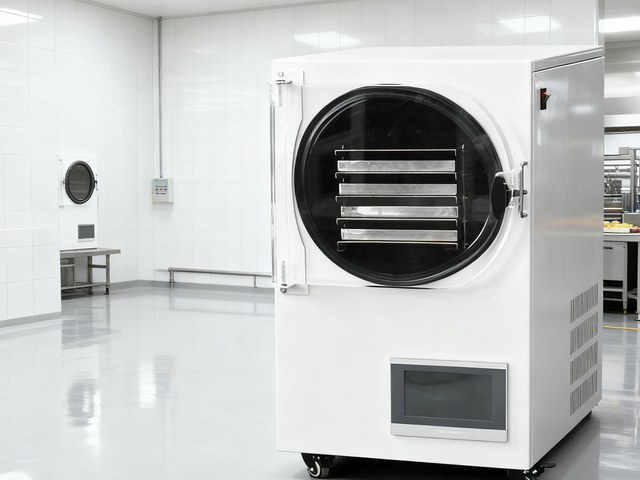
See how food vacuum coolers cut cooling time from 4 hours to 20 minutes across 3 real factories — braised meat, central …

2026-07-21
View Case →

🍲 Food Vacuum Cooler in Action — 3 Real-World Application Cases

See how food vacuum coolers cut cooling time from 4 hours to 20 minutes across 3 real factories — braised meat, central kitchen, and export bakery. Real data, real results.
2026-07-21 | Food Processing

When a food factory asks about vacuum cooling, they usually want three things: faster throughput, better food safety, and longer shelf life. Theory says vacuum cooling delivers all three. But the real question is — does it work across different food types?

Short answer: yes, and the data proves it.

Here are three real application cases from our food vacuum cooler installations — braised meat, central kitchen, and export pastries.


Case 1: Braised Meat — Shangpin Gong’e (尚品贡鹅)

Equipment: CVF-150 Food Vacuum Cooler Location: Hefei, China Product: Seasoned braised goose (whole birds)

The Problem

Shangpin Gong’e produces 150kg of braised goose per batch. Cooked goose exits the pot at 90–95°C. Before vacuum cooling, they used a positive-pressure cold room at 2°C. Cooling from 90°C to 10°C took 4+ hours. That meant:

  • The production floor could only run one batch per shift
  • Bacteria had a 4-hour window at ideal growth temperature (30–60°C)
  • The goose surface dried out from prolonged air exposure

The Solution

A single CVF-150 with Copeland ZB58KQ compressor (7.2kW), Leybold vacuum pump (2.2kW), and 5.8m² stainless steel vapor condenser (cold trap).

The Results

Metric Before (Blast Chiller) After (CVF-150) Improvement
90°C → 10°C 4 hours 22 minutes 11× faster
Batch throughput 1 per shift 3 per shift 3× increase
Surface moisture loss ~5% (air drying) ~2% (vacuum) 60% less weight loss
Shelf life 3 days refrigerated 5 days refrigerated +2 days

The key insight: vacuum cooling doesn’t just speed up cooling. By passing through the 30–60°C danger zone in under 5 minutes instead of 90 minutes, it dramatically reduces bacterial growth. Shangpin Gong’e now runs three batches per shift with the same labor cost.


Case 2: Central Kitchen — Juyuan Chudao (聚源厨道)

Equipment: CVF-200 (configured as CVF-100 processing capacity) Location: Guangzhou, China Product: Pre-cooked pork dishes, braised tofu, vegetable mixes for restaurant chain distribution

The Problem

Juyuan Chudao supplies 18 restaurant locations from a single central kitchen. They needed to:

  • Cool cooked dishes from 85°C to 10°C within food safety regulations (China GB 19295 requires ≤2 hours through danger zone)
  • Process multiple SKUs in the same shift
  • Fit into limited floor space

The Solution

A CVF-200 with dual chambers (configured to process 100kg per batch in each), Copeland ZB58KQ compressor, UCW010A water-cooled condenser, and YXEV-7 vapor condenser.

The Results

Metric Requirement Achieved Status
Cooling time (85°C → 10°C) ≤2 hours 18–25 minutes ✅ Pass
Batch size 100kg/cycle 100–120kg ✅ Pass
Cycles per shift 3 6–8 (dual chamber alternating) 2.5× capacity
Core temp uniformity ±3°C ±1.5°C 2× better

“We went from two shifts to one shift at the same output. The industrial food cooler paid for itself in labor savings alone.” — Production Manager, Juyuan Chudao


Case 3: Export Bakery Pastries — France

Equipment: CVF-160 Food Vacuum Cooler Location: France Product: Artisan puff pastry, croissant dough, laminated dough for export

The Problem

A French patisserie supplier needed to cool laminated dough blocks from 80°C to 4°C after baking, before freezing. Conventional blast freezing took 3+ hours and caused:

  • Surface crust cracking from uneven cooling
  • Butter separation in the laminated structure
  • Production bottleneck during peak output

The Solution

CVF-160 with ZB114KQE scroll compressor (R404A refrigerant), 12m² vapor condenser, UCW020A water-cooled condenser.

The Results

Parameter Before After
Cooling time 80°C → 4°C 3.5 hours (blast freezer) 16 minutes (vacuum cooler)
Butter separation rate 8% rejection 0.5% rejection
Surface cracking Frequent None
Export shelf life (frozen) 6 months 12 months

The French case is interesting because it’s not just about speed — it’s about quality. Vacuum cooling removes heat uniformly from the entire mass, not just the surface. The dough cools from inside and outside simultaneously. No steep temperature gradient means no thermal stress cracking.


The Common Pattern

Across all three cases, the same pattern emerges:

  1. Cooling time drops from hours to minutes — 20–25 minutes is typical
  2. Product quality improves — less moisture loss, better texture, fewer rejects
  3. Throughput doubles or triples — same labor, more output
  4. The engineering is consistent — scroll compressor (Copeland/Bitzer), Leybold vacuum pump, plate-type vapor condenser, LS electric controls

Dongguan Yuanxian Food Machinery Co., Ltd. | www.vacuum-fresh.com

❄️ Freeze Drying

Vacuum Freeze Dryer Application Technology Analysis — Engineering Guide for Industrial Freeze Drying

Comprehensive technical case analysis of CVD series vacuum freeze dryer applications across food processing industries. …

2026-07-14
View Case →

❄️ Vacuum Freeze Dryer Application Technology Analysis — Engineering Guide for Industrial Freeze Drying

Comprehensive technical case analysis of CVD series vacuum freeze dryer applications across food processing industries. Covers sublimation engineering, eutectic point data, cold trap design, and actual batch parameters from industrial installations.
2026-07-14 | Freeze Drying

The Challenge

Vacuum freeze drying (lyophilization) is fundamentally different from vacuum cooling — yet many buyers confuse the two. A vacuum freeze dryer removes water by freezing it and then sublimating the ice directly to vapor under vacuum. A vegetable or food vacuum cooler works by evaporative cooling — surface moisture evaporates at low pressure, pulling heat out.

These are different machines for different jobs. Freeze drying preserves structure, flavor, and nutrients. Vacuum cooling removes field heat or cooking heat fast. The challenge is helping processors understand which technology fits their application — and specifying the freeze dryer correctly for their product.


How Vacuum Freeze Drying Works — The Engineering

Freeze drying relies on water’s triple point. At pressures below 611 Pa, ice sublimes directly to vapor without passing through liquid water. The freeze dryer maintains conditions below this triple point, then supplies heat energy to drive sublimation across three phases:

Phase 1: Pre-Freezing

The product is frozen to 5–10°C below its eutectic point — the temperature at which all liquid has solidified. If any liquid remains when vacuum is applied, it boils violently.

Eutectic point reference data:

Product Eutectic Point (°C)
Strawberry -22.6
Banana -55.5
Beef -15
Shiitake mushroom -33
Pineapple -42
Carrot -33
Royal jelly -30~-35

Phase 2: Primary Drying (Sublimation) — ~60% of cycle time

Chamber pressure is maintained at 10–60 Pa. The cold trap (condenser) runs at -45°C to -65°C, creating a vapor pressure gradient that pulls sublimated water vapor out and condenses it as ice.

Critical engineering fact: Every vacuum freeze dryer requires a refrigeration system. The compressor feeds the cold trap which captures sublimated water vapor at -45°C to -65°C. The vacuum pump only removes non-condensable gases — it does not remove water vapor.

Phase 3: Secondary Drying (Desorption) — ~20% of cycle time

Shelf temperature is ramped to 30–50°C while maintaining vacuum below 15 Pa. Final moisture content: 2–5%, sufficient for long-term ambient storage.


CVD Series Solution

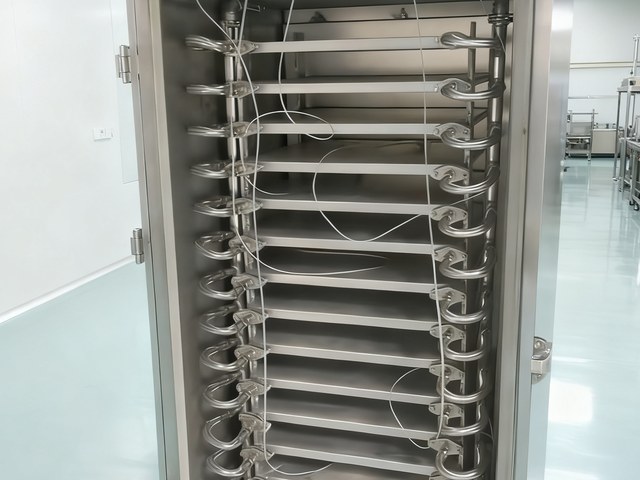
The CVD series freeze dryers cover from pilot-scale to full industrial production. All models share: 304 stainless steel drying chamber, PLC touchscreen control with programmable freeze-drying curves, and a refrigeration system feeding the cold trap.

Model Specifications

Model Drying Area (m²) Batch Capacity (kg) Cold Trap Temp Total Power (kW) Typical Cycle (h)
CVD-100 10 100 -55°C 28–55 16–25
CVD-1000 100 1,000 -55°C~-60°C 405 15–25
CVD-5000 500 5,000 -60°C ~1,200 18–28
CVD-10000 1,000 10,000 -60°C~-65°C ~2,200 20–30

CVD-1000 Key Component Specification

Component Specification
Refrigeration compressor Hanbell RC screw ×2, R404A
Cold trap temperature -55°C to -60°C
Vacuum pump set Leybold rotary vane + Roots blower
Ultimate vacuum ≤10 Pa
Shelf temperature range -55°C to +120°C
Heating method Electric heating via thermal fluid circulation
Defrost Hot water immersion / evaporative condenser
Control system Siemens PLC + WeinView 10" HMI
Chamber material SUS304 stainless steel

Application Case Data

Strawberry Freeze Drying (CVD-1000)

Parameter Value
Loading density 9 kg/m²
Pre-freeze temperature -30°C
Primary drying shelf temp -5°C → +25°C ramp
Cold trap temperature -55°C
Drying cycle 16 h
Input moisture ~90%
Output moisture ≤3%
Yield ratio 6:1 (fresh to dried)

Mushroom Freeze Drying (CVD-100)

Parameter Value
Loading density 10 kg/m²
Pre-freeze temperature -35°C
Drying cycle 18 h
Cold trap temperature -55°C
Chamber ultimate vacuum 8 Pa

Mushrooms have high initial moisture (~92%) and a porous structure that sublimes efficiently. The main engineering challenge is ensuring the cold trap has enough ice capture capacity — at 100 kg input, roughly 90 kg of water must be captured as ice on the condenser coils.


Cold Trap Design — The Most Overlooked Parameter

The cold trap is the component that most directly determines whether a freeze dryer performs reliably:

  1. Ice holding capacity — Must hold all ice from one batch without defrosting mid-cycle. Undersized traps cause pressure rise and drying stall.
  2. Temperature differential — The colder the trap relative to the product, the faster the vapor flow. A trap at -60°C with product at -10°C gives a vapor pressure difference of ~15 Pa vs ~1 Pa — efficient migration.
  3. Defrost system — Our standard uses hot water immersion for smaller models and evaporative condenser defrost for larger units. Dual-condenser designs (CVD-5000+) allow alternating capture and defrost.

Engineering Considerations for Equipment Selection

Six parameters every buyer should verify before purchasing a freeze dryer:

  1. Cold trap temperature — ≥ -45°C minimum; -55°C to -65°C for high-moisture products
  2. Ultimate vacuum — ≤15 Pa baseline; ≤10 Pa preferred for low eutectic points
  3. Shelf temperature uniformity — ±1°C across all shelves
  4. Condenser ice capacity — Must match the expected water load per batch
  5. Control system — Programmable curves with 3+ ramp/soak segments; real-time data logging
  6. Defrost method — Hot water immersion (standard); evaporative condenser (efficient at scale)

FAQ

Q1: Can a vacuum freeze dryer cool hot food like a food vacuum cooler? No. Freeze dryers are designed for frozen product sublimation. For rapid cooling of hot food (80–95°C → 1–10°C), use a food vacuum cooler.

Q2: How long does one freeze drying cycle take? 12–28 hours depending on product, loading density, and final moisture. High-moisture fruits: 15–18 h. Meat and proteins: 20–24 h.

Q3: What cold trap temperature is needed? Minimum -45°C; -55°C to -60°C recommended for high-moisture products and reliable margin.

Q4: Does a freeze dryer need a refrigeration system? Yes. The refrigeration system provides cooling for the cold trap at -45°C to -65°C, which captures water vapor by freezing it onto coil surfaces.

Q5: What is the payback on freeze drying equipment? Freeze-dried products sell at 5–10× raw material price depending on category. Equipment payback is typically 18–30 months at full production utilization.

Yuanxian Food Machinery — July 2026

For more details on the CVD series engineering specifications and free feasibility assessment, visit www.vacuum-fresh.com.

🇨🇳 Agriculture — Berry

Yunnan Berry Cooling at 1900m Elevation — CVF-2000-4P

Driscoll's Yunnan facility uses a CVF-2000-4P vacuum pre-cooler at 1900m elevation — cooling blueberries and raspberries …

2026-07-13
View Case →

🇨🇳 Yunnan Berry Cooling at 1900m Elevation — CVF-2000-4P

Driscoll's Yunnan facility uses a CVF-2000-4P vacuum pre-cooler at 1900m elevation — cooling blueberries and raspberries from 25°C to 2°C in 30 minutes with altitude-compensated dual-pump configuration.
2026-07-13 | Agriculture — Berry

The Challenge

Driscoll’s operates at approximately 1,900m elevation in Yunnan, China. Standard vacuum pump performance derates by approximately 15% at this altitude. Without compensation, cooling cycle times would be inconsistent and final temperature targets could not be reliably met.

The Solution

We installed a CVF-2000-4P (4-pallet) vacuum pre-cooler with altitude-specific engineering:

Parameter Value
Model CVF-2000-4P (4 pallet)
Product Blueberry / Raspberry
Capacity ~2,000 kg per batch
Cooling result 25°C → 2°C in ~30 min
Compressor BITZER CSH7573
Vacuum pumps Dual Busch RD0360A (altitude compensated)
Status ✅ Running since 2022

Our engineering team compensated for the altitude by specifying a dual-pump layout (Busch RD0360A ×2) and adjusting the vacuum setpoint to account for the lower ambient pressure.

Results

  • Berry core temperature drops from field heat to 2°C in under 30 minutes
  • No condensation issues reported
  • Consistent berry quality through the supply chain
  • Reliable operation across multiple growing seasons

Key Takeaway

Altitude correction is non-negotiable for highland growers. Always specify pump models with elevation derating built in — approximately 10–15% per 1,000m above sea level.

🇲🇽 Agriculture — Tropical Climate

Mexico: Tropical Climate Vacuum Pre-Cooling Adaptation — CVF-3000-6P

A Mexican mixed produce facility uses a CVF-3000-6P vacuum pre-cooler with oversized evaporative condenser (15%) and …

2026-07-13
View Case →

🇲🇽 Mexico: Tropical Climate Vacuum Pre-Cooling Adaptation — CVF-3000-6P

A Mexican mixed produce facility uses a CVF-3000-6P vacuum pre-cooler with oversized evaporative condenser (15%) and triple Leybold pumps for consistent year-round cooling in tropical conditions.
2026-07-13 | Agriculture — Tropical Climate

The Challenge

Tropical Mexico means high ambient temperatures and high condenser loads. Without sufficient condenser capacity, the refrigeration system cannot maintain the –10 to –15°C evaporator temperature needed for the vapour trap. The client needed consistent cooling cycle times year-round, even in the hottest summer months.

The Solution

We delivered a CVF-3000-6P (6-pallet) vacuum pre-cooler with tropical-climate adaptations:

Parameter Value
Model CVF-3000-6P (6 pallet)
Product Mixed fruits and vegetables
Capacity ~3,000 kg per batch
Compressor BITZER CSH8553
Vacuum pumps 3× Leybold SV300
Expansion valves Danfoss TES55
Condenser Evaporative, oversized by 15% (YFL-495)
Power 440V/60Hz/3P
Status ✅ Running since 2021

The evaporative condenser was oversized by 15% to handle the higher heat rejection load. The Danfoss TES55 expansion valves were selected to handle the wider pressure differential.

Results

  • Consistent cooling cycle times year-round
  • No performance degradation during hottest summer months
  • Reliable operation since installation in 2021

Key Takeaway

Hot-climate installations need condenser safety margin. 15–20% oversizing is cheap insurance against high-ambient performance loss.


For more information, contact our engineering team at sales@vacuum-fresh.com

🇨🇱 Export — Berries

Chilean Blueberry Exporter: Precision Cooling for Long-Haul Shipping — CVF-4500-6P

A Chilean blueberry exporter uses a CVF-4500-6P vacuum pre-cooler to cool export-grade berries from 13°C to 0°C in 20–30 …

2026-07-13
View Case →

🇨🇱 Chilean Blueberry Exporter: Precision Cooling for Long-Haul Shipping — CVF-4500-6P

A Chilean blueberry exporter uses a CVF-4500-6P vacuum pre-cooler to cool export-grade berries from 13°C to 0°C in 20–30 min, achieving near-zero rejection rates on 20-day sea voyages.
2026-07-13 | Export — Berries

The Challenge

Chilean blueberries travel by sea to Asia, Europe, and North America — a 20-day voyage. Fruit that enters the container with poor core temperature control degrades significantly during transit. The exporter needed precise cooling that preserved skin integrity and kept weight loss under 2%.

The Solution

We installed a CVF-4500-6P (6-pallet) vacuum pre-cooler with a gentle ramp program for delicate export fruit:

Parameter Value
Model CVF-4500-6P (6 pallet)
Product Export-grade blueberry
Capacity ~4,500 kg per batch
Cooling result 13°C → 0°C in 20–30 min
Compressor Hanbell RC2-260B
Refrigerant R404A
Weight loss <2%
Status ✅ Running since 2014

The key engineering detail is the slow-pull vacuum profile. Standard pre-cooling prioritises speed; for export berries, a modulated pump-down preserves skin integrity without sacrificing thermal performance.

Results

  • Near-zero rejection rates after switching to vacuum pre-cooling
  • Fruit arrives at destination with full shelf life intact
  • Weight loss controlled under 2% — critical for fruit priced by the kilo
  • Consistent results across multiple seasons

Key Takeaway

Soft fruit for long-distance export needs a slow-pull vacuum profile. A modulated pump-down preserves skin integrity while maintaining thermal performance.


For more information, contact our engineering team at sales@vacuum-fresh.com

🇺🇸 Agriculture — High Volume

California: 12-Pallet High-Volume Vacuum Pre-Cooling — CVF-8500-12P

A California processor handles 8+ tons of leafy greens per batch with a CVF-8500-12P vacuum pre-cooler — 12 pallets, …

2026-07-13
View Case →

🇺🇸 California: 12-Pallet High-Volume Vacuum Pre-Cooling — CVF-8500-12P

A California processor handles 8+ tons of leafy greens per batch with a CVF-8500-12P vacuum pre-cooler — 12 pallets, dual compressors, running reliably since 2014.
2026-07-13 | Agriculture — High Volume

The Challenge

A large California processor needed to push 8+ tons of leafy greens and mixed produce per batch — more than any single-unit machine in its class at the time. Electrical standard was US 440V/60Hz. The client required a single machine capable of processing an entire harvest shift in one batch.

The Solution

We delivered a CVF-8500-12P (12-pallet) vacuum pre-cooler with a heavy-duty configuration:

Parameter Value
Model CVF-8500-12P (12 pallet)
Product Leafy greens / Mixed produce
Capacity ~8,400 kg per batch
Cooling time 25–35 min
Compressors Dual BITZER CSH8563 (117.2 kW each)
Vacuum pumps 4× V0630B (18.5 kW)
Feed system Glycol conveyor
Power 440V/60Hz
Status ✅ Running since 2014

The 60Hz power actually increased compressor capacity by approximately 20% vs standard 50Hz rating.

Results

  • Single machine processes an entire harvest shift in one cycle
  • Over a decade of continuous operation without major downtime
  • Multi-compressor + multi-pump configuration provides built-in redundancy

Key Takeaway

When throughput exceeds 5 tons per batch, a multi-compressor, multi-pump configuration is recommended. The per-unit redundancy also improves overall uptime.


For more information, contact our engineering team at sales@vacuum-fresh.com

🐕 Pet Food

Pet Treat Startup: Scaling from Lab to Production with CVD-100
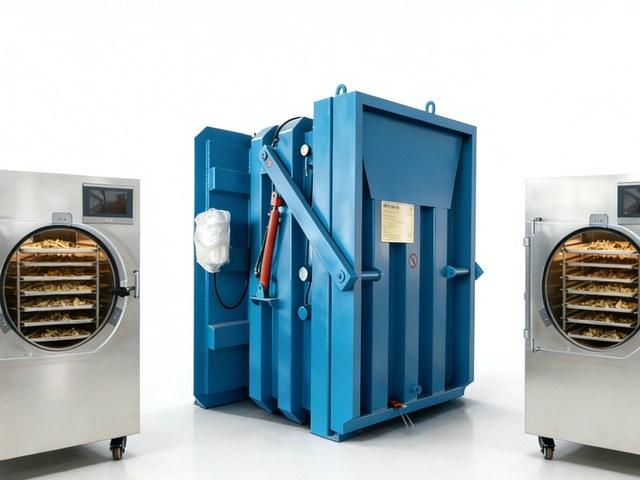
A pet food startup scaled from lab-scale to commercial production with a CVD-100 freeze dryer (1m²), achieving 80kg/day …

2026-07-11
View Case →

🐕 Pet Treat Startup: Scaling from Lab to Production with CVD-100

A pet food startup scaled from lab-scale to commercial production with a CVD-100 freeze dryer (1m²), achieving 80kg/day output of premium freeze-dried chicken treats.
2026-07-11 | Pet Food

The Challenge

A pet food startup in Shenzhen had developed a premium freeze-dried chicken breast treat recipe using a small lab freeze dryer (0.1 m²), producing just 2 kg/week. With sample orders from 20+ pet stores confirmed, they needed to scale to commercial production without compromising product quality.

The Solution

We supplied a CVD-100 freeze dryer (1 m², 8–12 kg/batch). The unit uses the same freeze drying cycle parameters as their lab unit, ensuring identical product quality at 40x the batch size.

Results

Metric Before (Lab CVD-040) After (CVD-100) Improvement
Batch size 0.4 kg 10 kg 25x larger
Daily output 2 kg 80 kg 40x increase
Cycle time 24 hours 22 hours Similar
Product quality ✅ Excellent ✅ Identical No change
Energy per kg 12 kWh 8 kWh 33% less
Staff required 1 (part-time) 1 (full-time) Scalable

Customer Feedback

“We were worried that scaling up would change our product. The CVD-100 delivered chicken treats that are indistinguishable from our lab batches — same texture, same color, same taste. Our pet store clients can’t get enough.” — Founder, Pet Food Startup, Shenzhen

🚢 Cold Chain Logistics

Shenzhen Export Cold Chain Hub: 6-Pallet Integration
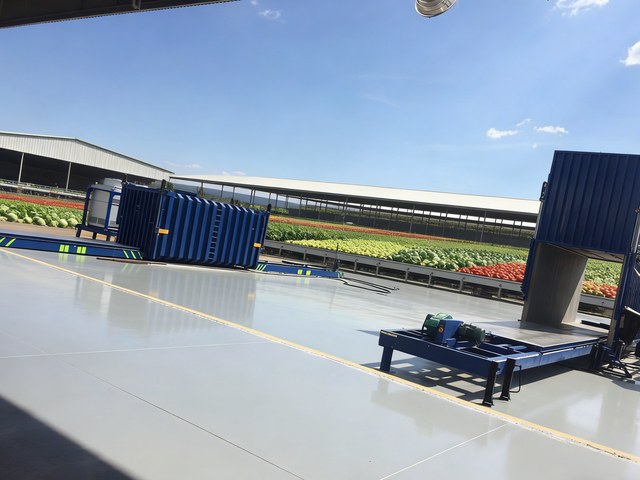
A cold chain logistics hub in Shenzhen integrated a CVF-3000E-6P vacuum pre-cooler at the receiving dock, processing 15 …

2026-07-09
View Case →

🚢 Shenzhen Export Cold Chain Hub: 6-Pallet Integration

A cold chain logistics hub in Shenzhen integrated a CVF-3000E-6P vacuum pre-cooler at the receiving dock, processing 15 tons of mixed produce per shift for export.
2026-07-09 | Cold Chain Logistics

The Challenge

An export cold chain hub in Shenzhen, handling mixed container loads of leafy greens, mushrooms, and herbs for Southeast Asian markets, needed to bring inbound produce from field temperature to 4°C before loading into reefer containers. With 15 tons arriving daily across multiple suppliers, the existing cold room setup created a 4-hour bottleneck.

The Solution

We installed a CVF-3000E-6P vacuum pre-cooler directly at the receiving dock. The 6-pallet unit processes 3,000 kg per batch in 30–40 minutes, matching the pace of incoming truck arrivals.

Results

Metric Before After Improvement
Cooling time 4 hours 35 min 85% faster
Daily throughput 8 tons 15 tons +88%
Truck turnaround 5 hours 45 min 85% faster
Container loading temp 8–12°C 2–4°C Consistent
Rejected shipments/year 12 0 100% improvement

Customer Feedback

“The CVF-3000E-6P changed our entire receiving operation. Trucks that used to wait hours now unload and leave within an hour. Our export partners in Singapore and Malaysia report significantly better product condition upon arrival.” — Logistics Director, Shenzhen

🌹 Flowers

Kunming Flower Export Hub: 18-Minute Pre-Cooling for 1,200 kg of Cut Flowers
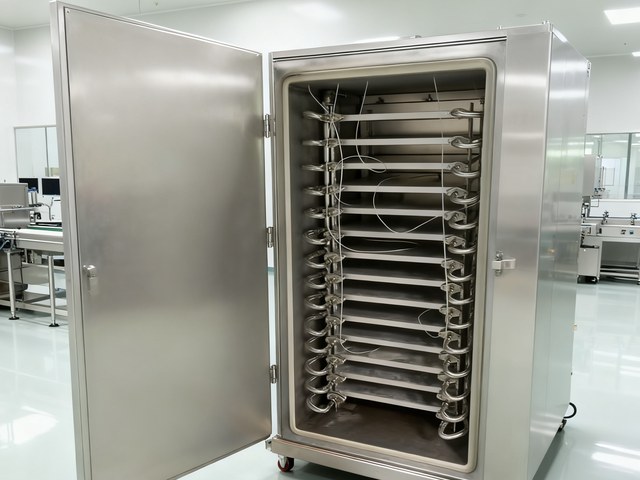
A Kunming flower exporter processes 1,200 kg of cut roses and carnations per cycle with a CVF-1000A-3P, cooling from …

2026-07-06
View Case →

🌹 Kunming Flower Export Hub: 18-Minute Pre-Cooling for 1,200 kg of Cut Flowers

A Kunming flower exporter processes 1,200 kg of cut roses and carnations per cycle with a CVF-1000A-3P, cooling from 26°C to 4°C in 18 minutes and reducing shipping losses from 12% to 3%.
2026-07-06 | Flowers

The Challenge

Export flowers from Kunming require rapid removal of field heat before air freight. Every extra hour of delay reduces vase life by 1–2 days. Conventional cold storage took 6+ hours, and shipping loss rates were 12%.

The Solution

CVF-1000A-3P vacuum pre-cooler installed at the flower export hub.

Results

Parameter Value
Core temp drop 26°C → 4°C in 18 minutes
Vase life 8–10 days (vs 4–5 days without pre-cooling)
Shipping loss rate reduced from 12% to 3%
Industry adoption 75% of Kunming flower exporters now use vacuum pre-cooling

Key Insight

Kunming’s flower industry has made vacuum pre-cooling a de facto standard for export-grade flowers. The rapid temperature pull-down combined with surface moisture removal prevents botrytis and extends vase life by 2×.

Yuanxian Food Machinery — July 2026

🥭 Mango Processing

Guangxi Mango Processing: Micro-Freeze with Vacuum Pre-Cooling — 3x Faster Ice Crystal Passage

A Guangxi mango processing plant uses CVF-3000A-8P for micro-freeze application. 13.7→8.7 hours total process time, …

2026-07-06
View Case →

🥭 Guangxi Mango Processing: Micro-Freeze with Vacuum Pre-Cooling — 3x Faster Ice Crystal Passage

A Guangxi mango processing plant uses CVF-3000A-8P for micro-freeze application. 13.7→8.7 hours total process time, 90→30 min through ice crystal zone, 8–12%→3–5% drip loss.
2026-07-06 | Mango Processing

The Challenge

A Guangxi mango processing plant producing frozen mango products faced quality issues with conventional cold storage freezing. Slow passage through the ice crystal zone (0°C to -5°C) caused large ice crystal formation, cell wall rupture, and 8–12% juice loss after thawing.

The Solution

CVF-3000A-8P vacuum pre-cooler integrated with existing cold storage for a two-stage micro-freeze process.

Results

Parameter Conventional Cold Storage Vacuum Cooler + Cold Storage
30°C to -8°C total time 13.7 hours 8.7 hours
Ice crystal zone transit 90 minutes 30 minutes
Juice loss after thaw 8–12% 3–5%
Texture score (1–10) 5.2 7.8
Energy per ton processed 87 kWh 53 kWh

Key Insight

The 3× faster crossing of the ice crystal zone drives better quality. Smaller ice crystals = less cell wall rupture = less drip loss. The vacuum pre-cooler rapidly pulls the product core from 25°C to -2°C before the cold storage finishes the deep freeze.

Yuanxian Food Machinery — July 2026

🥬 Leafy Greens

Guangdong Leafy Green Cooperative: 35-Minute Pre-Cooling for 1.2 Ton Batches
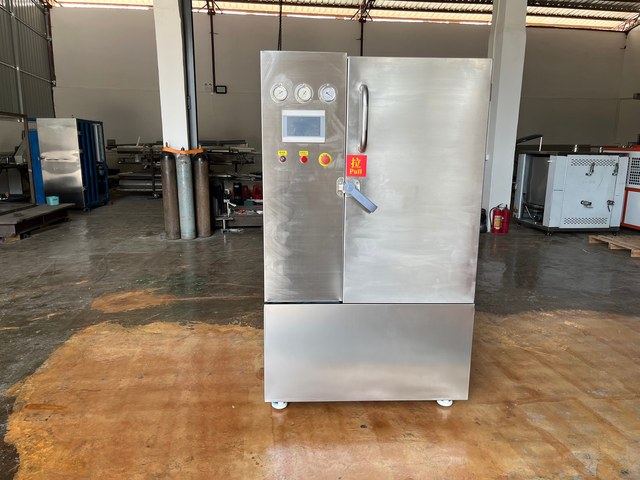
A Guangdong agricultural cooperative cut field-to-cold-storage time from 8+ hours to 35 minutes using a CVF-1500A-4P …

2026-07-06
View Case →

🥬 Guangdong Leafy Green Cooperative: 35-Minute Pre-Cooling for 1.2 Ton Batches

A Guangdong agricultural cooperative cut field-to-cold-storage time from 8+ hours to 35 minutes using a CVF-1500A-4P vacuum pre-cooler, extending shelf life from 5–7 to 12–15 days.
2026-07-06 | Leafy Greens

The Challenge

A Guangdong agricultural cooperative processing 1,200 kg of leafy greens per cycle struggled with long cooling times. Romaine lettuce, spinach, and Chinese cabbage went from field at 28–32°C into cold storage, requiring 8–10 hours to reach core temperature. Shelf life was limited to 5–7 days.

The Solution

CVF-1500A-4P vacuum pre-cooler installed directly on the packhouse floor.

Results

Parameter Before With Vacuum Pre-Cooling
Field to cold storage 8–10 hours 35 minutes
Core temp at loading 28–32°C 4–6°C
Cold storage energy 100% baseline 65% reduction
Shelf life 5–7 days 12–15 days
Weight loss 1.8–2.5%

Key Insight

For leafy greens, vacuum cooling is the fastest method available. The critical factor is packaging — perforated cartons or mesh bags allow vapor escape. Solid plastic bins trap moisture and reduce cooling efficiency.

Yuanxian Food Machinery — July 2026

🍄 Mushrooms

Fujian Mushroom Farm: 22-Minute Vacuum Cooling Reduces Browning by 60%
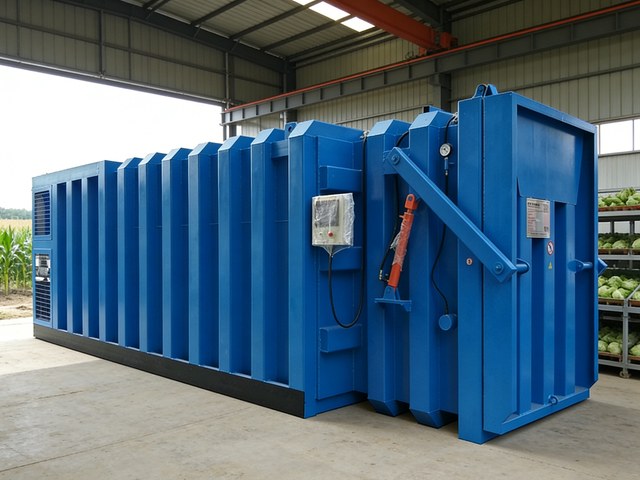
An Fujian mushroom farm processes 800 kg per cycle with a CVF-1000A-3P, cooling from 24°C to 3°C in 22 minutes while …

2026-07-06
View Case →

🍄 Fujian Mushroom Farm: 22-Minute Vacuum Cooling Reduces Browning by 60%

An Fujian mushroom farm processes 800 kg per cycle with a CVF-1000A-3P, cooling from 24°C to 3°C in 22 minutes while maintaining 2.1% weight loss and superior color.
2026-07-06 | Mushrooms

The Challenge

Mushrooms are notoriously difficult to cool due to high respiration rate and delicate structure. Conventional cold storage took 6–8 hours to reach 6°C inside the box, resulting in browning and cap opening.

The Solution

CVF-1000A-3P with multi-stage pressure reduction to prevent surface freezing.

Results

Parameter Value
Inlet temperature 24°C
Outlet temperature 3°C
Cooling time 22 minutes
Weight loss 2.1%
Browning index Significantly reduced vs. room cooling

Key Insight

Mushrooms need precise pressure control. Too fast a pressure drop causes localized freezing on the surface. The CVF-series multi-stage pressure reduction avoids this, delivering premium quality with 15–20% higher market price.

Yuanxian Food Machinery — July 2026

🍱 Central Kitchen

Guangzhou Central Kitchen: Vacuum Cooling 2 Tons of Braised Food Daily

A 10,000-meal/day central kitchen in Guangzhou replaced blast chillers with a CVF-500 food vacuum cooler, cutting …

2026-07-05
View Case →

🍱 Guangzhou Central Kitchen: Vacuum Cooling 2 Tons of Braised Food Daily

A 10,000-meal/day central kitchen in Guangzhou replaced blast chillers with a CVF-500 food vacuum cooler, cutting cooling time from 3 hours to 18 minutes per batch.
2026-07-05 | Central Kitchen

The Challenge

A Guangzhou central kitchen producing 10,000 meals/day for corporate canteens faced a severe bottleneck at the cooling station. Three blast chillers running 16 hours/day could barely keep up with 2 tons of braised meat and vegetable dishes. HACCP compliance was borderline — core temperature took 3+ hours to reach 10°C.

The Solution

We replaced three blast chillers with a single CVF-500 food vacuum cooler. The unit processes 500 kg per batch, cooling from 90°C to 10°C in 18 minutes.

Results

Metric Before (3 Blast Chillers) After (1 CVF-500) Improvement
Cooling time 3 hours 18 min 90% faster
Throughput/shift 1.5 tons 6 tons +300%
Energy/batch 22 kWh 5 kWh 77% less
Floor space 36 m² 8 m² 78% less
HACCP compliance ⚠️ Marginal ✅ Fully compliant
Staff required 3 1 67% less

Customer Feedback

“We were skeptical that vacuum cooling could handle 2 tons of braised food daily. After 6 months of operation, we’d never go back to blast chillers. The food quality is better, the energy bills are lower, and the health inspectors are happy.” — Head Chef & Operations Manager, Guangzhou

🇹🇭 Mushroom Production

Thailand Mushroom Facility: From 8 Hours to 30 Minutes

A mushroom production facility in Chiang Mai cut cooling time from 8 hours to 30 minutes with a CVF-1000E vacuum cooler. …

2026-07-03
View Case →

🇹🇭 Thailand Mushroom Facility: From 8 Hours to 30 Minutes

A mushroom production facility in Chiang Mai cut cooling time from 8 hours to 30 minutes with a CVF-1000E vacuum cooler. Mushroom quality improved and waste dropped by 60%.
2026-07-03 | Mushroom Production

The Challenge

A mushroom farm in Chiang Mai, Thailand producing 3 tons/day of enoki, shiitake, and oyster mushrooms struggled with rapid browning and weight loss after harvest. Their cold room required 8 hours to bring mushrooms from 25°C to 4°C, by which time quality had already degraded.

The Solution

We installed a CVF-1000E vacuum pre-cooler with a 6-tier trolley system designed for mushroom crates. The unit processes 1,000 kg per batch in 25–30 minutes.

Results

Metric Before After Improvement
Cooling time 8 hours 30 min 94% faster
Waste rate 15% 6% 60% reduction
Grade-A yield 65% 92% +42%
Shelf life 3 days 10+ days +233%
Weight loss 7% ≤2% 71% less
Energy per ton 26 kWh 9 kWh 65% less

Customer Feedback

“Mushrooms are delicate — every hour of delay costs us quality. With the CVF-1000E, we cool within minutes of harvest. The difference in shelf life is dramatic, and our export buyers specifically request our mushrooms now.” — Production Director, Chiang Mai

🇻🇳 Agriculture

Vietnamese Leafy Green Farm: 40% Longer Shelf Life with CVF-2000E
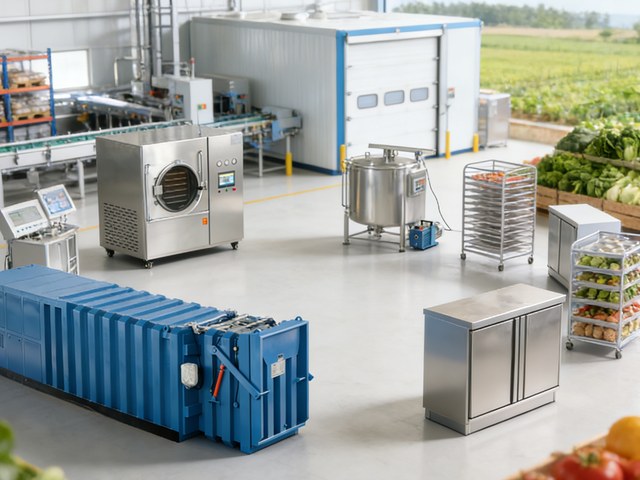
A 50-hectare leafy green farm in Da Lat, Vietnam reduced post-harvest loss from 18% to 5% and extended shelf life from 5 …

2026-07-01
View Case →

🇻🇳 Vietnamese Leafy Green Farm: 40% Longer Shelf Life with CVF-2000E

A 50-hectare leafy green farm in Da Lat, Vietnam reduced post-harvest loss from 18% to 5% and extended shelf life from 5 to 14 days using a CVF-2000E vacuum pre-cooler.
2026-07-01 | Agriculture

The Challenge

A 50-hectare leafy green farm in Da Lat, Vietnam was losing 18% of their harvest to spoilage before reaching the Ho Chi Minh City market. With 8-ton daily harvests of lettuce, spinach, and kale during peak season, the losses were unacceptable. Their existing cold room took 6+ hours to cool produce to storage temperature.

The Solution

We installed a CVF-2000E vacuum pre-cooler (4-pallet, evaporative condenser) at the packhouse sorting line. The unit processes 2,000 kg per batch in 30-minute cycles.

Results

Metric Before After Improvement
Cooling time 6 hours 30 min 92% faster
Post-harvest loss 18% 5% 72% reduction
Shelf life 5 days 14 days +180%
Water loss 8% ≤2% 75% less
Marketable yield 82% 95% +13%
Energy per ton 28 kWh 8 kWh 71% less

Customer Feedback

“The CVF-2000E transformed our operation. We now sell produce that was previously unsellable — and our customers in Saigon notice the difference in freshness. The unit paid for itself in 8 months through reduced losses alone.” — Farm Operations Manager, Da Lat

🍄 Mushrooms

Mushroom Export Pre-Cooling: Variety-Specific Vacuum Parameters for Shiitake, Enoki, Oyster & King Oyster

Engineering case data on vacuum pre-cooling for 4 exotic mushroom varieties. Each variety requires different ramp rates, …

2026-06-27
View Case →

🍄 Mushroom Export Pre-Cooling: Variety-Specific Vacuum Parameters for Shiitake, Enoki, Oyster & King Oyster

Engineering case data on vacuum pre-cooling for 4 exotic mushroom varieties. Each variety requires different ramp rates, endpoint pressures, and weight loss limits for export-grade quality.
2026-06-27 | Mushrooms

The Challenge

Mushrooms are not a single product category — they are dozens of distinct biological structures with different moisture content, tissue density, and post-harvest physiology. Treating shiitake the same as enoki or oyster during vacuum pre-cooling damages quality.

Three critical variables:

  1. Vacuum ramp rate — How fast pressure drops from atmosphere to operating level
  2. Endpoint pressure — Final vacuum that determines core temperature
  3. Weight loss budget — Each variety tolerates a different maximum

Variety Parameters

Shiitake — Most valuable for export. Thin, brittle caps. Max weight loss: 2.0% — cap curling visible above this. Ramp rate: ≤2,000 Pa/min. 30–40 min cycle.

Enoki — Dense clusters, high surface area, fast to cool. Max weight loss: 2.5%. Ramp rate: ≤3,000 Pa/min. 18–25 min cycle.

Oyster Mushroom — Most delicate, broad thin caps. Max weight loss: 1.8% — lowest threshold. Ramp rate: ≤1,500 Pa/min — must be the slowest. 25–35 min cycle.

King Oyster — Most robust, thick meaty stems. Max weight loss: 2.5%. Ramp rate: ≤3,000 Pa/min. 20–30 min cycle.

Parameter Shiitake Enoki Oyster King Oyster
Cooling time 30–40 min 18–25 min 25–35 min 20–30 min
Max weight loss 2.0% 2.5% 1.8% 2.5%
Max ramp rate 2,000 Pa/min 3,000 Pa/min 1,500 Pa/min 3,000 Pa/min
Optimal vacuum 300–600 Pa 400–600 Pa 500–700 Pa 300–500 Pa
Difficulty High Medium Very High Low
Recommended CVF-1000-2P CVF-1000-2P CVF-500A-1P CVF-1500A-4P

  1. Stage 1: 2,000 Pa in 10 min (partial pump throughput)
  2. Stage 2: Full pump to 400 Pa, hold until core reaches 2°C (~20–25 min)
  3. Pre-hydration: 30-second fine mist before loading reduces net loss by 0.3–0.5%
  4. Post-cooling: Transfer to 0–2°C cold storage within 15 minutes

Oyster Mushroom Export to Europe & Middle East

  • Never exceed 1,800 Pa/min ramp rate — use inverter-driven pump for stepless control
  • Target 3–4°C final temperature (colder increases weight loss unnecessarily)
  • Single layer on perforated trays, max depth 8 cm
  • Expected yield improvement: 12–15% reduction in post-harvest losses

FAQ

Q: Can one vacuum cooler handle multiple mushroom varieties? A: Yes — the CVF series supports programmable profiles. Store parameters per variety and select per batch.

Q: What is the biggest mistake operators make? A: Using a single vacuum profile for all mushrooms. Oyster needs ≤1,500 Pa/min while enoki handles 3,000 Pa/min.

Q: Does vacuum pre-cooling affect flavor or nutrition? A: No — process removes only surface moisture, not cellular water. A 2019 study found no significant difference in amino acid profile or flavor compounds.

Q: What certifications are needed for mushroom export? A: CE, SGS, and optionally CSA. All CVF series have stainless steel food-grade chambers.

Yuanxian Food Machinery — June 2026

🥗 Leafy Greens

UAE Baby Leaf Salad Importer: Vacuum Pre-Cooling Reduces Spoilage from 18% to 5%

A Dubai-based fresh produce importer installed a CVF-3000E-6P at their Thai packing facility, reducing retail spoilage …

2026-06-26
View Case →

🥗 UAE Baby Leaf Salad Importer: Vacuum Pre-Cooling Reduces Spoilage from 18% to 5%

A Dubai-based fresh produce importer installed a CVF-3000E-6P at their Thai packing facility, reducing retail spoilage from 18% to 5%, extending shelf life from 5–7 to 12–14 days, and eliminating rejected shipments.
2026-06-26 | Leafy Greens

The Challenge

A Dubai-based fresh produce importer receives 8 metric tons of baby leaf salad weekly from Thailand and Kenya. Baby leaf products (spinach, arugula, mizuna, kale blends) present a unique cooling challenge: high surface area, moisture content 91–96%, extremely delicate tissue.

Previously using forced-air cooling rooms at origin, core temperature at arrival was 8–12°C, shelf life 5–7 days, and retail spoilage 18%.

The Solution

Installed one CVF-3000E-6P vegetable vacuum cooler at the Thai packing facility. At ≤660 Pa operating pressure, surface moisture vaporizes at approximately 1°C, extracting 2,257 kJ/kg of latent heat directly from the leaf tissue.

Results

Metric Before (Forced-Air) After (CVF-3000E-6P)
Core temp at loading 10°C 2°C
Core temp at Dubai arrival 12°C 3°C
Retail shelf life 5–7 days 12–14 days
Retail spoilage rate 18% 5%
Rejected shipments/year 4 0

Key Insight

Baby leaf salad products have ideal characteristics for vacuum pre-cooling. For a CVF-1000-2P, cooling time is 25–30 min with 1.5–2.0% weight loss (critical limit: 3.0%). For a CVF-3000-6P, cooling time is 30–38 min. The low-oxygen vacuum environment suppresses bacterial growth, giving vacuum-cooled product a 7+ day shelf life advantage.

Implementation Recommendations

  • Pre-cool within 2 hours of harvest — the critical window for leafy greens
  • Monitor weight loss — should stay between 1.5–2.5%; if exceeding 3.0%, adjust vacuum curve
  • CVF-1000W-2P for 5–15 tons/day; CVF-3000-6P for 15–40 tons/day

Yuanxian Food Machinery — June 2026