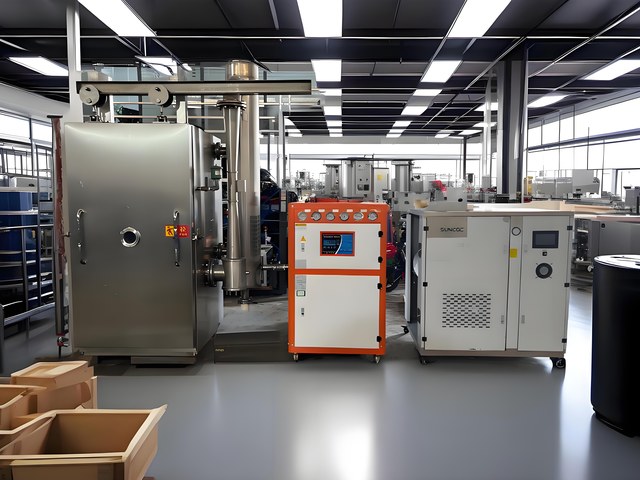
Future Trends in Food Preservation Technology — An Engineering Perspective
The Problem: The Industry Is Still Buying Yesterday’s Machines
At trade shows, customers repeatedly ask us the same question: “Will the machine I buy now be obsolete by 2027?” It is a fair question. Food preservation equipment has an operating life of 10 to 15 years. vacuum cooling equipment bought today will still be operating in 2038. So the real engineering task is not to choose the best machine at the moment, but to choose a machine whose architecture can withstand the energy prices, labor costs, and regulatory changes of the next decade. The trends we see are not theoretical speculation; they appear in every project we quote and manufacture.
The Reason: Three Pressures Are Reshaping Equipment Design
1. Electricity has become the largest single cost item. Electricity prices in domestic industrial zones are rising year by year, and export customers in Europe face even higher electricity prices. When we reviewed projects in 2026, we found that electric heating repeatedly became the single largest power-consumption point. In a 175 m² strawberry freeze-drying line analyzed this year, 220 kW electric heating accounted for 49% of the whole machine’s 445 kW installed power. The latent heat of vaporization of moisture in the product cannot be avoided, but generating heat with resistance wires is a cost problem, not a physics problem. 2. People who can tune processes are increasingly hard to hire. Skilled freeze-drying and precooling operators are hard to recruit, let alone retain. When operators retire, their process experience goes with them. Equipment that relies on manually set curves runs into problems once the person who set those curves leaves. 3. Refrigerant and food safety regulations are becoming stricter. R404A is still common, but its GWP (3922) makes it a target of EU F-Gas reductions. Export customers increasingly specify R448A/R449A or natural refrigerants. Food safety audits require recordable temperature data; handwritten logbooks will not pass.
The Principle: Machines Must Be Able to “Learn,” Not Just Cool Down
The breakthrough in future food preservation equipment is not some magical technology, but five engineering shifts that make machines more energy-efficient, easier to operate, and easier to audit:
- Heat pumps and steam heating replace resistance heating — the drying physics remain unchanged, and electricity costs are halved.
- PLC automation + preset process curves — process knowledge is stored in the machine, not dependent on operators.
- Combined drying processes — microwave-assisted, spray + freeze-drying, for heat-sensitive materials.
- Green refrigerants — R448A/R449A and low-GWP systems become standard.
- Integrated cold chain — precooling, freeze-drying, and modified atmosphere packaging are designed as one system, rather than purchased separately. None of these five requires a physics breakthrough; they can be done today.
The Solution: Data from Real Projects
| Heating method | Specific energy consumption | Total installed power |
|---|---|---|
| Resistance heating (original design) | 5.9 kWh/kg | 297.85 kW |
| Steam/heat pump alternative | 2.9 kWh/kg | approx. 178 kW |
| Specific energy consumption decreased by 51%. Calculated at 1000 kg/cycle, 20 hours/cycle, and 300 production days per year, a single line saves about 90,000 kWh of electricity per year — without even counting the gains in drying quality. | ||
| The same conclusion appeared in the review of the 175 m² strawberry line: heat pump-assisted heating reduced specific energy consumption from 10.7 to 5.5 kWh/kg, a 49% reduction, while equipment cost increased by only about 15%. | ||
| Trend 2 — Automation is already shipping. | ||
| Today’s vacuum freeze dryers come standard with PLC control, touchscreen, preset shelf temperature curves, and USB data export. The operator selects a product curve, and the PLC automatically runs the entire sublimation program, with multi-channel real-time temperature recording, curve browsing, and exportable audit data. | ||
| Precooling lines, meanwhile, offer remote monitoring as a commonly quoted option. Export customers in Singapore, Mexico, and Indonesia use it to view cycle status remotely, so faults are detected before they become downtime. | ||
| Trend 3 — Combined processes for heat-sensitive products. | ||
| Microwave vacuum freeze-drying is moving from papers into pilot lines. The physical logic holds: microwaves improve heat transfer under vacuum (convection is very poor in a vacuum), and the sublimation interface temperature is higher, which favors water vapor diffusion. The spray + freeze-drying combination is being evaluated in dairy and probiotic projects. They do not replace traditional shelf freeze dryers; they extend them. | ||
| Trend 4 — Refrigerant selection becomes a compliance issue. | ||
| Our compressor selection guide now lists R448A/R449A as the default recommendation for export projects, and R404A is used only for maintenance of old equipment. Under a -35°C evaporating condition, the COP of Hanbell RC2 series screw compressors with R404A/R448A is between 1.0 and 1.5 — the earlier the refrigerant is selected, the better the figures hold up. | ||
| Trend 5 — The cold chain becomes one system. | ||
| The greatest shelf-life improvements come from technology combinations, not from a single choice. Vacuum precooling removes field heat in 20-30 minutes (17500 kg of lettuce from 30°C→1°C takes only 20-30 minutes); freeze-drying removes more than 90% of the water to achieve long-term preservation; modified atmosphere packaging locks in the result. We now increasingly quote precoolers, freeze dryers, and packaging lines as one engineering package. |
Trend 1 — Heating systems are being redesigned. The strongest evidence comes from a 1-ton shiitake mushroom freeze-drying line we analyzed on July 31, 2026 (100 m², CVD-10000 class). The design specification clearly states: “If a steam heat source or boiler is available, the 120 kW electric heating can be omitted, reducing the whole machine’s power by 120 kW.”
Case Study: The 1-Ton Shiitake Mushroom Line Is a Template for the Future
The 1-ton shiitake mushroom freeze-drying line (100 m², 31.7 m³ chamber, 2 Hanbell RC2 units, 95.4 kW cooling capacity) is our currently recognized benchmark design for energy-saving freeze-drying:
- Chamber: 1.8 × 2.2 × 8 m, 304 stainless steel
- Sublimation heat load: 2,419,650 kJ per cycle (855 kg water removed)
- Cold trap continuous load: 33.6 kW at -40°C
- Vacuum system: 2 sets of rotary vane + Roots, evacuates to 60 Pa in 26 minutes
- Heating: 120 kW electric heating, can be fully replaced by an existing boiler Conclusion: Future energy-saving potential lies in the energy structure, not in the drying chamber. If a customer has a waste steam source, they should not pay for 120 kW resistance heating.
FAQ
Q1: Will electric heating disappear from freeze dryers? It will not disappear completely. Where steam or heat pump conditions are unavailable, it remains the simplest option. But we now evaluate steam or heat pumps first in every project, because a 40-50% saving in specific energy consumption can recover the equipment price difference in 2-3 years. Q2: Is microwave-assisted freeze-drying ready for mass production? Yes, for pilot and specialty product lines. For commodity drying, traditional shelf freeze dryers are still more reliable and more mature. Hybrid models will appear in the next 3-5 years. Q3: Must R448A be used to replace R404A? If exporting to the EU or planning to export later, choose R448A/R449A from day one. Changing the refrigerant afterward is much more expensive than choosing correctly from the start.
Q4: Can automation really replace experienced veteran technicians? PLC preset curves replace the manual part—heating and cooling rates, pressure-holding time, and alarm response. Operators’ work shifts to loading/unloading and quality inspection, and the training threshold actually drops. Q5: Should a precooler and a freeze dryer be purchased together? If the product line includes both fresh products and long-shelf-life products, yes. The precooler supports the fresh-product line, and the freeze dryer supports the long-shelf-life line. Sharing engineering, after-sales service, and spare parts lowers total cost of ownership. Q6: How much audit data can the machine record? The PLC system records multi-channel temperature curves in real time, stores them onboard, and exports them via USB. For HACCP and export audits, it can directly replace handwritten logbooks.
Summary
Over the next five years, the make-or-break factors for food preservation equipment will be energy structure, automation, and system integration—not any single breakthrough. Winning machines will cut heating energy consumption in half, run process curves on their own, use compliant refrigerants, and integrate into the cold chain rather than stand alone as an isolated unit. These engineering solutions can be implemented today—because we have already started quoting this way. Author: Yuanxian Machinery Engineering Technology Team | Date: 2026-08-01