The equipment has been in use for two years, and the cooling cycle has stretched from 20 minutes to 35 minutes—this is a common type of service call encountered in after-sales. The conclusion first: check the vacuum chamber for leaks first, do not suspect the vacuum pump first, and even less need to mess with defrosting. However much air leaks in, the pump must extract that much extra, the pumping speed margin is consumed, the pre-evacuation time is lengthened, and the entire cycle lengthens accordingly.
Vacuum precoolers handle room-temperature fruits and vegetables (25~30°C feed), while food vacuum rapid coolers handle hot food (80~90°C feed), with single-batch processing times in the range of 15~30 minutes. Clarifying this premise can eliminate more than half of misjudgments. This article organizes the technical points of vacuum system leak detection and seal maintenance according to on-site executable inspection items.
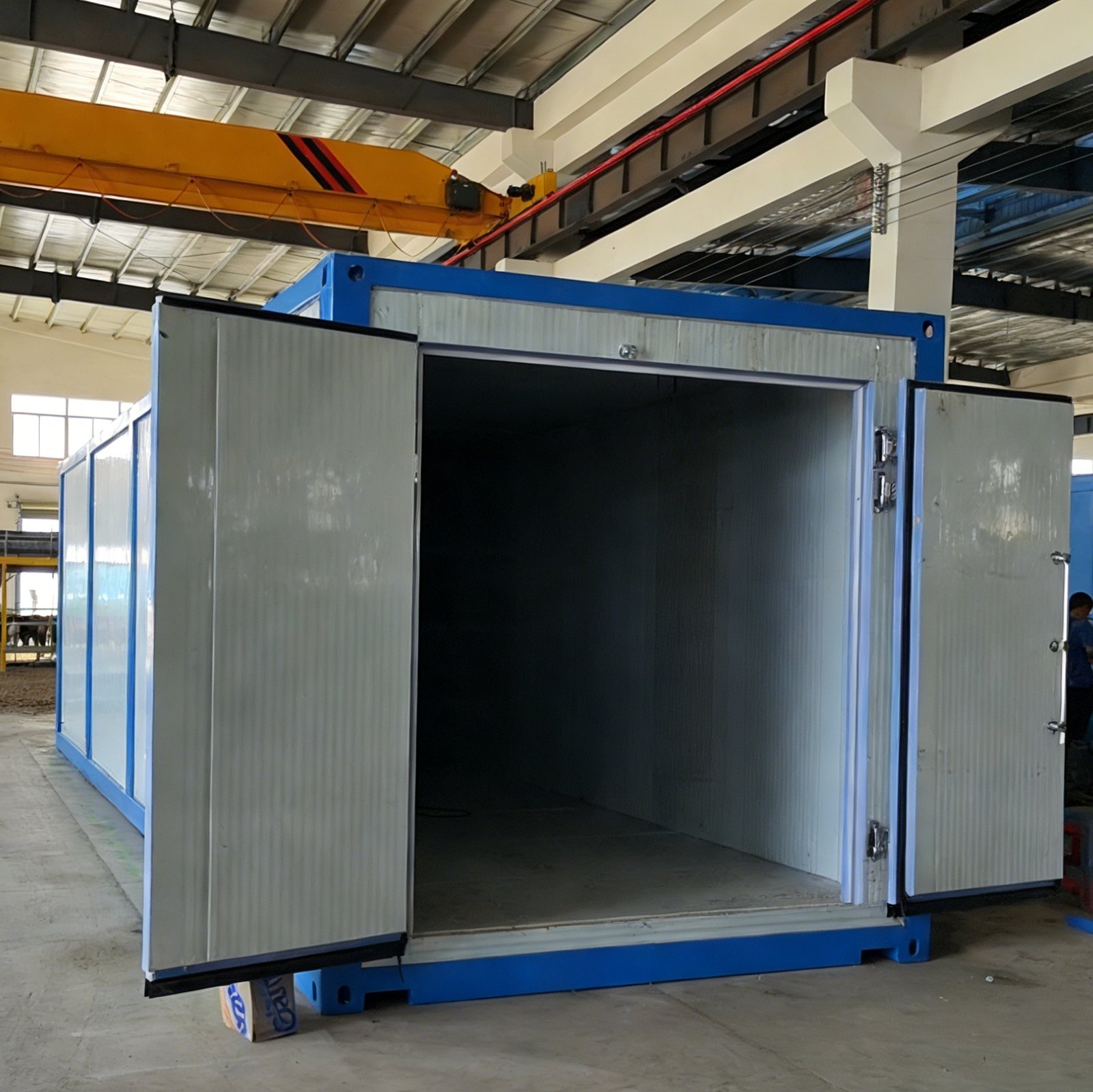
I. "It's time to defrost" is a common misjudgment
Vacuum precooling and vacuum rapid cooling are intermittent operations, with a single batch lasting only 15~30 minutes. Frost does form on the water catcher, but the high-temperature stage of the second cycle will automatically melt the frost left from the previous batch, and the machine does not need—nor is there such a thing as—"inadequate defrosting."
Therefore, the rule of thumb "slower cooling = needs defrosting" does not hold for vacuum precoolers or vacuum rapid coolers. If the pressure in the vacuum chamber won't rise and pumping is slow, check for leaks; problems on the refrigeration side have a separate diagnostic path, so don't mix them together. This is also why some users repeatedly clean the water catcher yet never see improvement—the direction was wrong from the start.
II. Three major sources of leakage, ranked by on-site frequency
| Source | Symptom | On-site judgment |
|---|---|---|
| Door gasket damaged by impact / aged | Suction sound at door seam, still leaks after closing tight | Check whether the gasket impression is even and whether there are damaged gaps |
| Valve seals not tight | Airflow still present after extraction valve and switching valve are closed | Valve body seal ring aged, pneumatic butterfly valve not fully actuated |
| Chamber weld leak points | Micro-leaks at welds and joints, inaudible | Apply leak detection fluid; bubbles indicate the leak point |
The door gasket looks like a cheap part, but it is actually a high-incidence failure point. One damaged door opening seal strip drags down the entire equipment cycle—this is also why we wrote "check the door gasket impression once per shift" as the opening item in the maintenance manual.
III. Pressure rise rate method: shut off the pump and measure pressure rise, calculate the leak rate in 10 minutes
To determine whether there is a leak, it can be done on site without disassembling the machine:
Evacuate to ultimate vacuum → close the extraction valve and vacuum pump → record pressure P1
→ wait Δt minutes → record pressure P2
Leak rate Q = (P2 - P1) × V / Δt     Unit: Pa·m³/s
Taking an 8 m³ chamber as an example: after evacuating to 600 Pa, close the valve, and the pressure rises back to 1200 Pa in 10 minutes.
Q = (1200 - 600) × 8 ÷ 600 ≈ 8 Pa·m³/s
A pressure rise of this magnitude indicates that the sealing problem is already fairly obvious and needs to be addressed. Segmented isolation can narrow down the range: close the extraction valve, switching valve, and each branch one by one, and see which segment shows the greatest change in pressure rise rate. To locate the specific leak point, use the manual application method: apply leak detection fluid (soapy water also works) to welds, flanges, and valve body joints; where bubbles appear is the leak point. For the door gasket, check the impression; an intermittent impression indicates the door is not closing evenly or the gasket has already deformed.
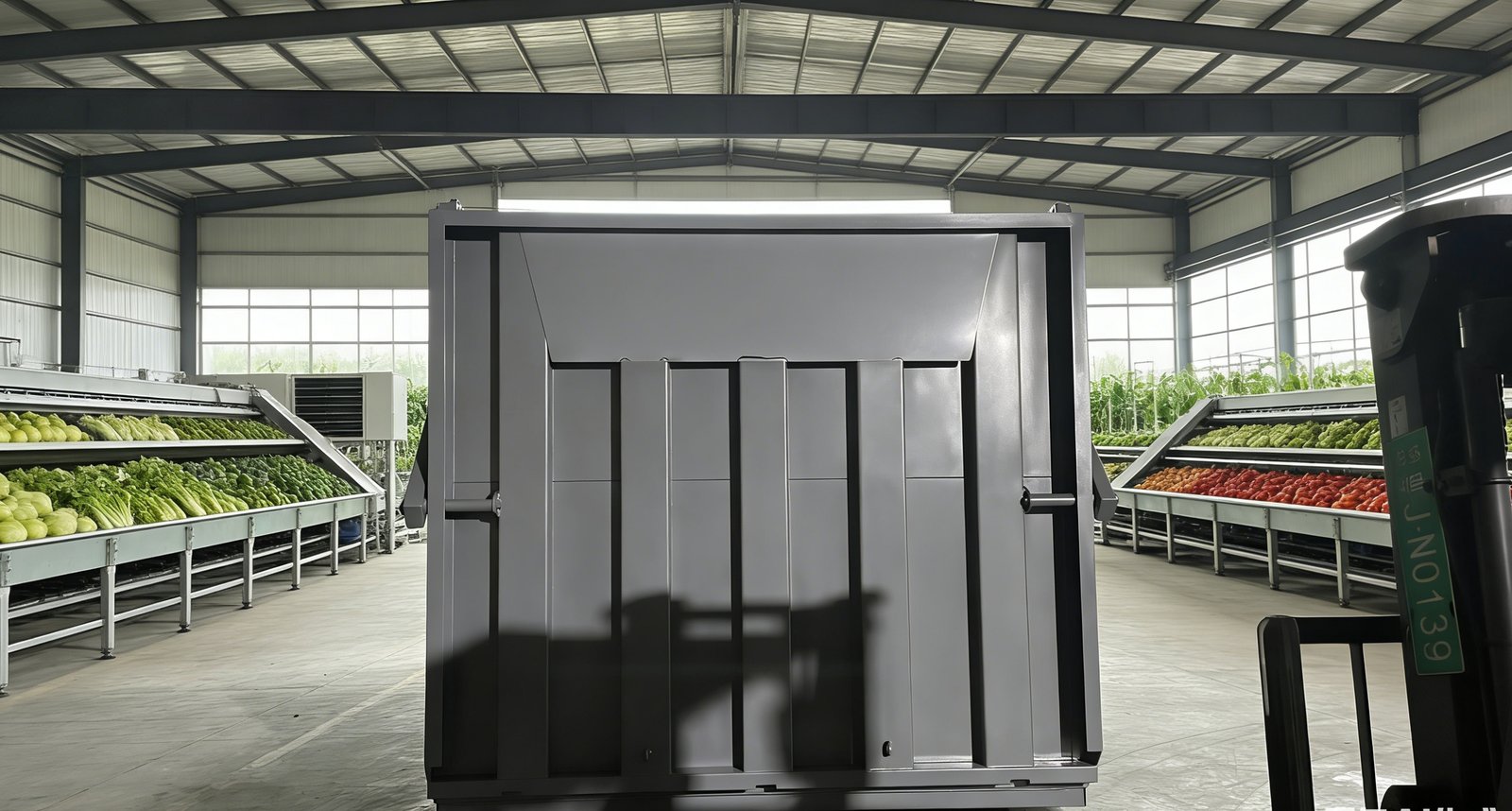
IV. Leakage and pump sizing are essentially the same thing
In our empirical pumping speed formula S = V × k / t_evac, the coefficient k is taken as 5~8, which originally reserves margin for "leakage + product outgassing." An undersized pump is a design defect; a correctly sized pump with large leakage gives the same result—the cycle is lengthened.
On site, this formula can be used to quickly locate the bottleneck:
Actual pre-evacuation time = (V / S) × ln(101325 / 660) × 1.3
If the calculated pre-evacuation time exceeds 70% of the claimed cycle, the bottleneck of this equipment lies in the extraction stage. The judgment rule applies to both new and old equipment: for new equipment, check the configuration first; for old equipment, check for leaks first.
V. Seal maintenance checklist
| Inspection item | Cycle | Key points |
|---|---|---|
| Door gasket impression / damage | Every shift | Even impression, no gaps, door locked in place |
| Valve action and seal rings | Monthly | Pneumatic butterfly valve opens and closes fully, seal rings free of hardening and cracks |
| Welds and joints | Quarterly | Recheck key welds with leak detection fluid |
| Full-machine pressure holding test | Factory / annual inspection | Evacuate to ultimate vacuum, then measure pressure rise rate, record and archive |
Archiving the factory pressure holding data is a highly cost-effective step in this method: when equipment performance changes later, a comparison will tell you whether it is equipment degradation or a change in operating conditions, without relying on guesswork.
VI. Another type of "lengthened cycle": water catcher frosting
Beyond leakage, there is another situation that lengthens the cycle: after the water catcher frosts, its water capture efficiency drops, and the water vapor load is shifted to the vacuum pump.
The criterion is the production rhythm: for production lines with continuous production exceeding 4 hours, or a line takt of less than 30 minutes/batch, it is recommended to use dual water catcher switching (hot fluorine defrosting, pneumatic butterfly valve switching), so that one group captures water while the other defrosts, working alternately. This type of problem must be judged separately from leakage—if the pressure rise rate is normal but the cycle is still on the long side, investigate in the direction of the water catcher.
Frequently asked questions
How often should the door gasket be replaced? There is no fixed cycle; judge by the impression. If the impression is uneven, has gaps, or there is still a suction sound at the door seam after closing, it should be replaced.
What pressure rise rate is considered normal? Use the factory pressure holding record as the baseline for longitudinal comparison. After evacuating to 600 Pa and closing the valve for 10 minutes, if the pressure rise amplitude is noticeably larger, troubleshoot according to the three steps above.
If a new equipment's cycle does not reach the claimed value, is it also leakage? For new equipment, check the configuration first. Use (V / S) × ln(101325/660) × 1.3 to calculate the pre-evacuation time; if it accounts for more than 70% of the claimed cycle, the problem lies in the matching of the pump and the chamber, not in the seals.
How do you distinguish water catcher frosting from leakage? Perform the pressure rise rate test first. If the pressure rise rate is normal but the cycle is on the long side, check the water catcher; if the pressure rise rate clearly exceeds the standard, check the seals.
To see the standard configuration of specific models, you can refer to the two product lines fruit and vegetable vacuum precooler and food vacuum rapid cooler; more articles on equipment maintenance and operating parameters are collected in the Technical Library. If you need to calculate the extraction time according to your chamber volume and pump configuration, you can contact us directly.