Interested in a Similar Solution?
Tell us about your product and capacity — we will prepare a tailored proposal for your application.
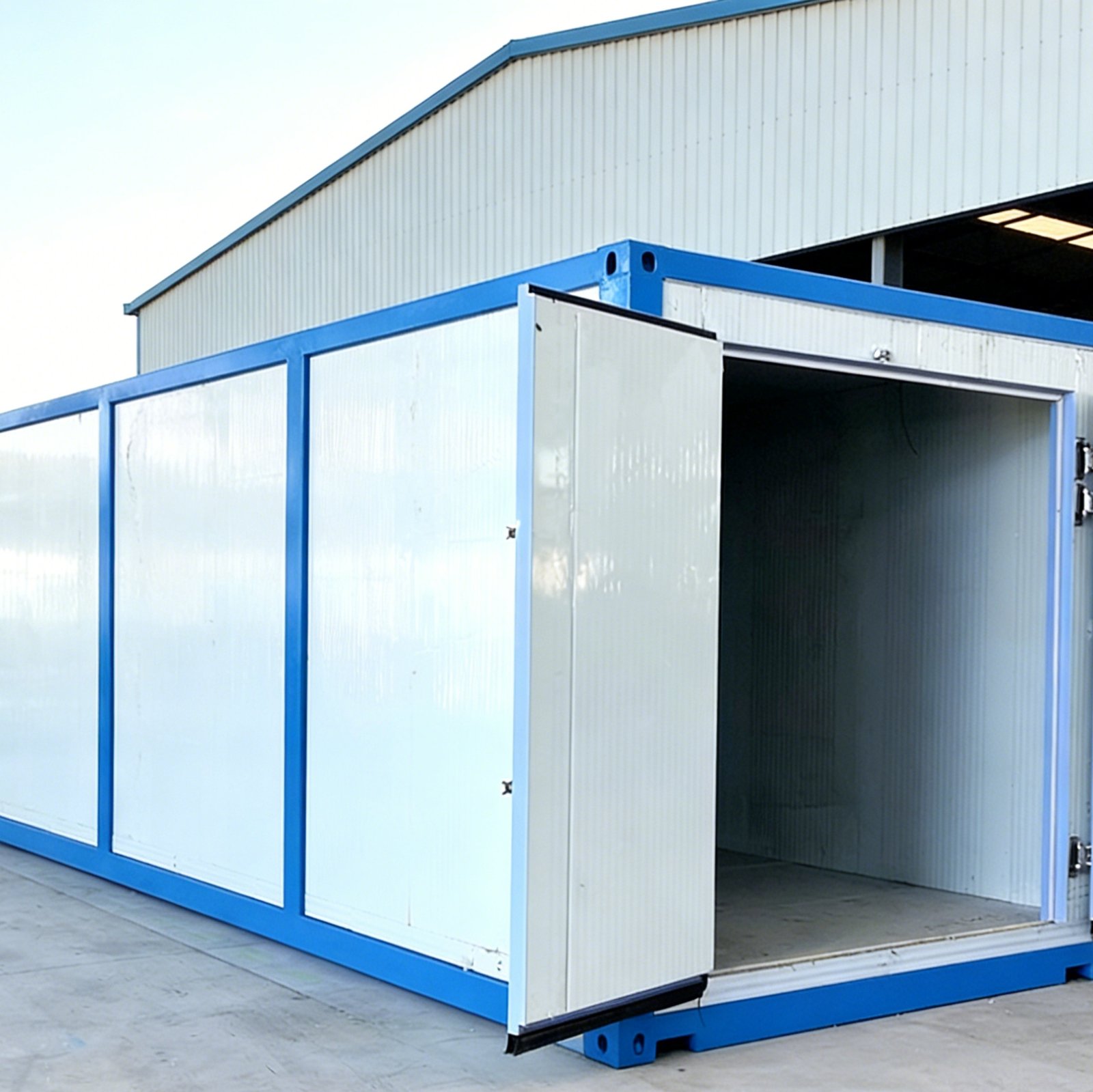
Ask About This Solution →Fruit and vegetable vacuum precooling and food vacuum rapid cooling share the four words “vacuum cooling,” but the operating conditions are two different things: one pulls down from ambient temperature, the other pulls down from 90°C. The three lines—feed temperature, vacuum system configuration, and hygiene level—do not match up. Having the same machine run cooked food today and produce tomorrow does not hold up in engineering terms. What can genuinely be shared is the cold source plant room and the monitoring layer, not the chamber.
Line One: Feed Temperature Determines the Heat Load Structure
Fruit and vegetable vacuum precooling handles post-harvest produce at ambient temperature. In summer, leafy greens come out of the field at 28–30°C, and precooling must pull the temperature back to the 0–4°C cold storage range. A single batch is 300–6000 kg, the cycle is 20–30 minutes, and the moisture loss rate is generally controlled at 3%–5%; for leafy greens, with good control, 1.5%–2.5% can be achieved.
Food vacuum rapid cooling handles hot food straight out of the pot, with a feed temperature of 80–90°C and a target of 10–20°C. Take an Indonesian food factory project as an example: a single batch of 1000 kg cooked food, cooled from 90°C to 10°C, with the cycle held under 20 minutes, evaporated water calculated at 6%–10% per batch, and material specific heat taken as 3.6 kJ/(kg·K).
| Item | Fruit and vegetable vacuum precooling | Food vacuum rapid cooling |
|---|---|---|
| Feed temperature | 25–30°C (ambient produce, carrying field heat) | 80–90°C (hot food straight from the pot) |
| Target end temperature | 0–4°C | 10–20°C |
| Single batch capacity | 300–6000 kg | 50–1000 kg |
| Single batch cycle | 20–30 minutes | ≤ 20 minutes |
| Evaporated water / moisture loss | 3%–5% (leafy greens 1.5%–2.5%) | 6%–10% / batch |
| Cooling capacity per unit throughput (order-of-magnitude reference) | Approx. 0.12 kW/kg (CVF-300: 37.4 kW / 300 kg) | Approx. 0.26 kW/kg (1000 kg-class project: 265 kW / 1000 kg) |
The last row is taken from the configurations of two different projects, and the basis is not entirely consistent—it can only be read as an order of magnitude: the cooling capacity that must be removed per kilogram of material by a rapid cooler is more than double that of a precooler, because 90°C material carries a large amount of sensible heat and evaporates more water.
Line Two: The Vacuum System Configuration Is Completely Different
What must be drawn out of a precooler chamber is mainly non-condensable gas and a small amount of water vapor. Provided the equipment seals properly, the vacuum pump’s job is to pull the chamber below 600 Pa and hold it there, so sizing a rotary vane pump by chamber volume is sufficient—the CVF-300 uses a pump of about 90 m³/h, and the CVF-1000 class uses a pump of about 300 m³/h. Evacuation time accounts for a large part of the cycle: in the CVF-300’s 30-minute cycle, evacuation takes 10.6 minutes.
A rapid cooler cannot be configured this way. Once 90°C material enters the chamber, the initial period after opening has the most intense evaporation and the largest instantaneous water vapor volume. Relying entirely on a rotary vane pump to draw water vapor will emulsify the pump. Rapid coolers use a two-stage approach: first a water ring pump (resistant to high temperature and high humidity) pulls the chamber down to the 10 kPa range, carrying away most of the water vapor; after the pressure drops, the rotary vane pump is started. The 1000 kg configuration in Indonesia uses a water ring pump of 300 m³/h (11 kW) paired with a rotary vane pump of 300 m³/h (7.5 kW, one duty one standby).
Precoolers come standard with rotary vane pumps; rapid coolers come standard with a water ring pump plus a rotary vane pump. This is determined by the process, not an optional item that can be omitted. For the division of labor between the two pump types in vacuum cooling, see the system description on the fruit and vegetable vacuum precooler product page.
Line Three: The Water Catcher and Cooling Capacity Are Split According to the Process Curve
The water catcher is a prerequisite for vacuum cooling: if water vapor is not condensed into water inside the chamber, the pressure cannot be maintained and the cycle will keep climbing; the condensed cooling capacity must also be continuously carried away by the refrigeration system, otherwise the water catcher itself will saturate. The evaporating temperature of the water catcher is uniformly in the -10 to -5°C range.
The difference lies in how the cooling load is split. The heat load of a rapid cooler is concentrated in the period right after the chamber opens, when water vapor is most intense. The Indonesian project made water catching two-stage: the first-stage water catcher is connected to ambient-temperature water (32/37°C cooling tower supply), handling 220 kW; the second stage is connected to -5°C calcium chloride secondary refrigerant (25% concentration, 0°C return), handling only the remaining 45 kW. The entire refrigeration system is configured for 220 kW plus 45 kW, rather than using one large 265 kW machine to carry all the way from 90°C down to 10°C—equipment redundancy is smaller, and the operating load tracks the process curve more closely.
The load magnitude of a precooler is much smaller, and there is no need to dedicate a stage specifically for “instantaneous large amounts of water vapor.” Copying the rapid cooler’s two-stage water catching onto a precooler adds a secondary refrigerant system that will not be fully utilized.
Line Four: Hygiene Level and Chamber Form
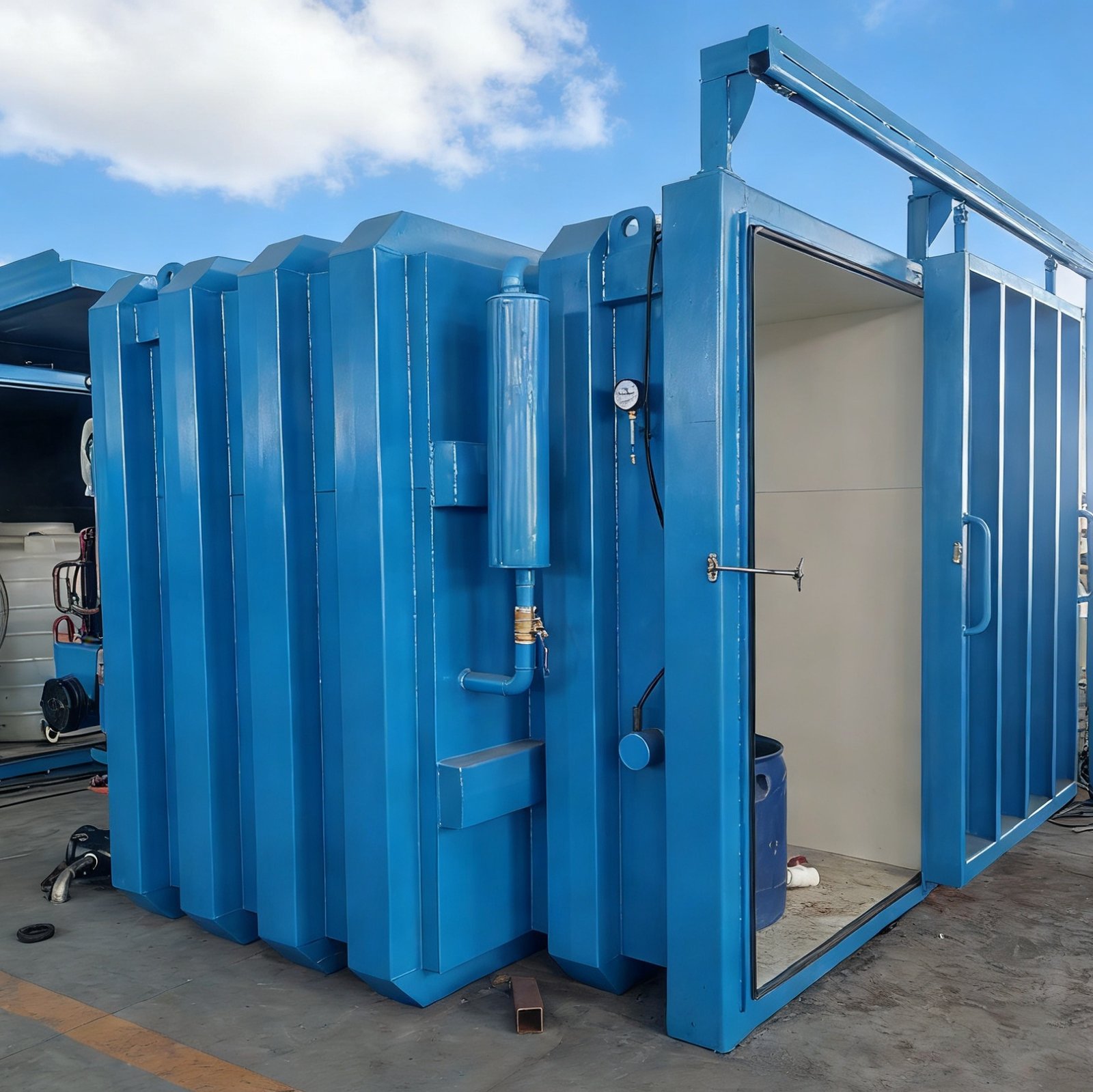
A rapid cooler handles ready-to-eat cooked food; the chamber includes food-contact surfaces, is fitted with stainless steel and double sliding doors, and materials roll in and out on carts as complete units, and it must be washable. A fruit and vegetable precooler is loaded with wooden crates, turnover baskets, and pallets; the chamber is built to a pallet structure, and the form follows the loading. The differences in chamber material and cleaning requirements are considerable; for details, see our article “Why Fruit and Vegetable Precoolers Use Carbon Steel Chambers and Food Rapid Coolers Must Use Stainless Steel.”
What Can Be Shared Is the Cold Source, Not the Chamber
If a factory needs both to cool hot food and to precool produce, the feasible approach is: make the cold source, vacuum pump station, cooling water system, and central monitoring into a shared plant room, and configure the chamber and vacuum system separately according to each process. The 34 rapid coolers in Indonesia are in the form of centralized liquid supply and centralized monitoring; when multiple units share a plant room, the plant room and piping will not get out of control.
Conversely, if there is only one machine and it is expected to run cooked food today and produce tomorrow, that does not hold up in engineering terms—it is not a matter of changing a parameter, but of reconfiguring all the technical lines above.
When a Customer Asks About “One Machine, Two Uses,” Ask Four Numbers First
- Single batch material weight (kg);
- Feed temperature (°C)—ambient produce, or 80–90°C hot food;
- Target end temperature (°C);
- Batches per shift (determines the number of units and the scale of the plant room).
Once these four numbers are available, the answer to whether to build one precooler, one rapid cooler, or a combined solution with a shared cold source is basically clear.
Summary
Fruit and vegetable precooling and cooked food rapid cooling share the principle of vacuum, but the process curve, vacuum system, water catching and cooling capacity structure, and hygiene level are all different. Trying to cover both processes with one machine is basically not achievable; what can genuinely be saved is the cold source and the plant room layer. To see how a specific project should be configured, send us the single batch weight, feed temperature, end temperature, and batches per shift, and we will calculate based on actual operating conditions. For the configuration approach to rapid cooling in food factories, see the food vacuum rapid cooler product page; for actual projects in precooling and rapid cooling, see the customer case study collection.
Interested in a Similar Solution?
Tell us about your product and capacity — we will prepare a tailored proposal for your application.
Ask About This Solution →