Chamber material is a technical question that comes up often in vacuum cooling equipment selection. The conclusion first: fruit and vegetable vacuum precoolers come standard with a Q235 carbon steel chamber, with the inner wall given an anti-rust coating; food vacuum rapid coolers come standard with a SUS304 stainless steel chamber. What decides the material is not price, but what material the equipment contacts—the former handles fresh produce with skin and shells, the latter handles cooked foods that can be eaten directly.
Both chamber types can stably reach an ultimate vacuum of ≤600 Pa, and there is no difference in vacuum-pulling or cooling capacity. The real differences lie in the three parameters of corrosion resistance, hygiene grade, and cost.
1. Two machines, two materials, and the logic is actually quite clear
| Item | Fruit and vegetable vacuum precooler | Food vacuum rapid cooler |
|---|---|---|
| Chamber material (standard) | Q235 carbon steel, 6mm plate, internal and external coating | SUS304 stainless steel (food grade) |
| Material contacted | Fresh fruits and vegetables (unprocessed, with skin/shell) | Cooked foods, baked goods, braised products, prepared dishes (directly edible) |
| Hygiene requirement | Washdown-capable (high-pressure water gun) | Food contact surfaces, compliant with food safety regulations |
| Typical chamber volume | 8.0~12.0 m³ (2~3 pallets) | 0.4~4.8 m³ (by batch weight) |
| Batch capacity | 1000~1500 kg | 50~1000 kg |
| Moisture loss | 1~2% | 3~5% (typically about 5% from 90℃→10℃) |
Both chamber types can stably pull down to an ultimate vacuum of ≤600 Pa. The specification differences are corrosion resistance, hygiene, and cost—not strength.
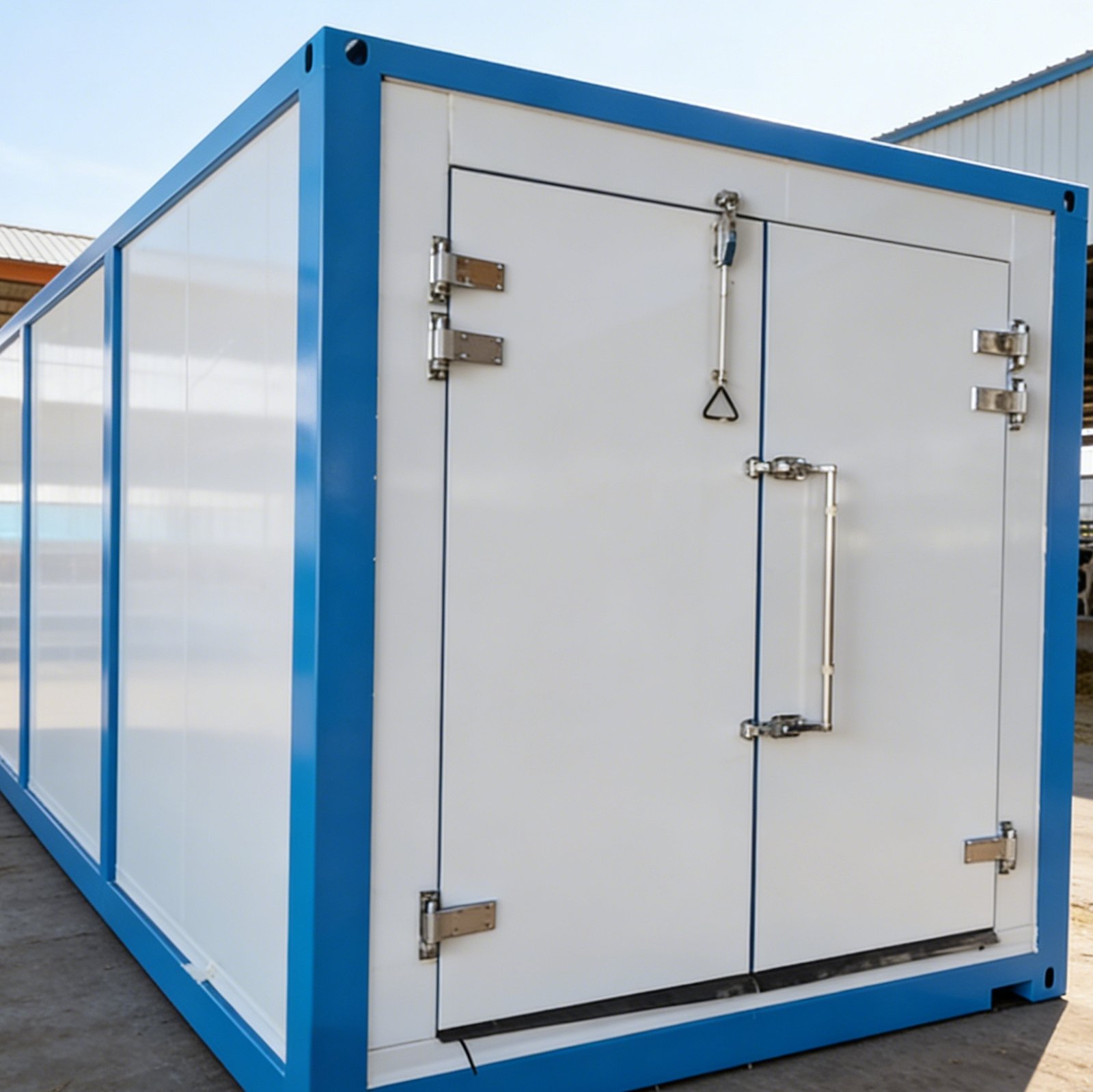
2. Fruit and vegetable precoolers: Q235 carbon steel is the mainstream choice
First, the material is not directly edible, and the engineering hygiene standard is "washdown-capable." A two-pallet fruit and vegetable precooler proposal for export to Canada (CVF-1000A-2P) specifies: the chamber uses Q235 carbon steel, plate thickness 6.0mm, internal and external coating, washable with a high-pressure water gun. Leafy greens and root vegetables carry mud and dew, precooling moisture loss is only 1~2%, most of the water vapor condenses on the moisture trap (evaporator coil), and the chamber inner wall mainly contacts condensation and a small amount of volatiles—coated carbon steel parameters are sufficient to handle this.
Second, carbon steel material cost is much lower. According to the internal costing basis of August 2026, carbon steel material cost is less than one third of stainless steel. For an 8 m³ chamber, the material cost of the carbon steel option is still less than one third of the stainless steel option. Fruit and vegetable precoolers are mainly sold to farm cooperatives and origin purchasing stations, where buyers are sensitive to purchase price, and carbon steel can bring the whole-machine price down.
Third, fruit and vegetable chambers are large, which amplifies the cost of stainless steel. Precooler chambers are generally 8~12 m³; the three-pallet CVF-1500A-3P chamber is 12.0 m³. Switching the whole thing to stainless steel would more than double the material cost, while in fresh produce scenarios this corrosion resistance is not needed.
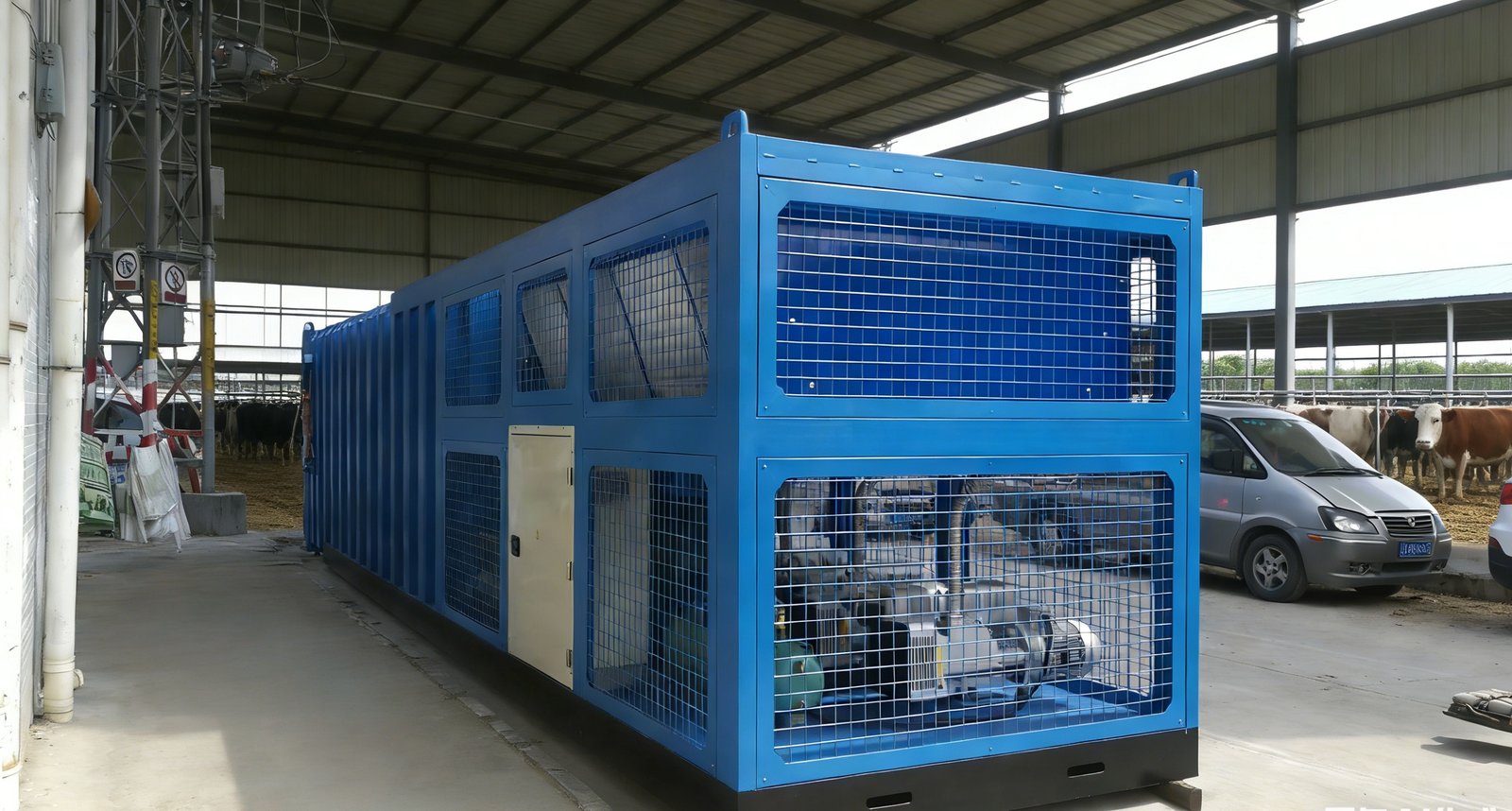
3. Food rapid coolers: SUS304 stainless steel is a hard requirement
Cooked foods, baked goods, and braised products are directly edible. Cooling from 90℃ to 10℃, the chamber inner wall contacts high-temperature water vapor and grease. Carbon steel in this hot, humid, oily environment will rust and harbor dirt, and will not pass any audit at a food factory.
Technical documentation for food rapid coolers for the European market specifies: the whole machine uses T-304 stainless steel, meeting strict food safety regulations. Here stainless steel is not an upgrade option, but an entry ticket.
Food rapid cooler chambers are also smaller (0.4~4.8 m³), so the stainless steel premium is controllable. A small chamber plus high hygiene requirements makes stainless steel the cost-effective choice instead.
4. When do fruit and vegetable precoolers also use stainless steel?
A real upgrade case. A Canadian customer bought a three-pallet fruit and vegetable precooler in 2018, and made an upgrade on a repeat purchase in August 2026:
| Item | 2018 original machine | 2026 repeat purchase upgrade |
|---|---|---|
| Model | CVF-1500A-3P | CVF-1500A-3P |
| Chamber plate | Q235 carbon steel | SUS304 stainless steel 8mm/6mm |
| Door panel | Q235 carbon steel | SUS304 stainless steel 8mm + 6mm |
| Door type | Hydraulic door | Manual hinge door (stainless steel hinges ×3) |
| Hydraulic system | Included | Removed (not needed for hinge door) |
| Chamber volume | 12.0 m³ | 12.0 m³ |
| Batch capacity | 1500 kg | 1500 kg |
| Cooling cycle | 20~40 min | 20~40 min |
Three conclusions:
- For export markets or sufficiently high hygiene requirements, fruit and vegetable precoolers can be built in stainless steel;
- Changing material is not a simple substitution—the door type and hydraulic system change along with it (hinge door replaces hydraulic door);
- Cooling performance is unchanged: capacity, cycle, and vacuum level are completely identical.
Selection advice: For domestic farms, cooperatives, and origin purchasing stations, the standard carbon steel is sufficient; for export to Europe and America, organic certification, or customers explicitly requiring food-grade contact surfaces, upgrade to SUS304 and adjust the price by material, with delivery extended by 10~15 days.
5. Frequently asked questions
Will the carbon steel chamber rust? The inner wall has an anti-rust coating. After use, rinse with a high-pressure water gun and air-dry, and it will not rust. Avoid prolonged soaking in strongly corrosive cleaning agents.
Can a stainless steel chamber be used on a fruit and vegetable precooler? Yes. The Canadian repeat-purchase machine above is a fruit and vegetable precooler with a stainless steel chamber; capacity, cycle, and vacuum level are completely identical, only the cost rises and delivery is extended by 10~15 days.
Does chamber material affect cooling speed? No. Cooling speed is determined by vacuum level, moisture trap area, and refrigeration capacity. For the same model, the carbon steel version and the stainless steel version have the same cycle and end-point temperature.
Which parts of a food rapid cooler are stainless steel? The chamber inner wall, door panel, moisture trap piping, and vacuum piping all meet food-grade requirements. The moisture trap coil is commonly Φ32×3 seamless steel pipe, about 350 m; the vacuum piping is Φ110/Φ63 stainless steel.
6. How to choose in one sentence
First ask whether the material is directly edible. Fresh produce with skin and shells→carbon steel is sufficient; cooked foods, baked goods, braised products, prepared dishes→stainless steel is mandatory.
To see specific configurations, you can compare the standard specifications of the two product lines, fruit and vegetable vacuum precoolers and food vacuum rapid coolers; for preliminary model selection by capacity, go to the equipment selection page, and if you need calculations based on operating conditions, you can contact us directly.