The Problem
Functional foods and nutraceuticals depend on bioactive compounds — probiotics, enzymes, vitamins, collagen peptides, and antioxidants. These molecules are inherently thermally sensitive: most degrade at temperatures above 40°C.
Conventional drying methods (spray drying, hot air, drum drying) expose products to 60–200°C, causing:
- Probiotics: 70–90% viability loss during spray drying at inlet 160°C
- Vitamin C: 40–60% degradation in hot air drying
- Collagen peptides: structural denaturation at >60°C
- Enzymes: complete activity loss above 55°C
The result: a product that claims “contains probiotics” but delivers 10–30% of the labelled active count.
Why Freeze Drying Is the Answer
Freeze drying operates at -30°C to -55°C during the primary sublimation phase, with final product temperature never exceeding 40°C. The entire process happens in a vacuum environment (10–30 Pa), eliminating oxidation.
Bioactive retention comparison:
| Active Compound | Freeze Drying | Spray Drying | Hot Air Drying |
|---|---|---|---|
| Vitamin C | 90–95% | 50–70% | 4–20% |
| Probiotic viability | 85–95% | 10–30% | — |
| Collagen structure | 95%+ intact | 60–70% intact | denatured |
| Enzyme activity | 85–95% | 20–40% | 0–5% |
| Antioxidant capacity | 90–95% | 60–75% | 30–50% |
Engineering Challenges
Functional ingredients present unique freeze drying challenges:
| Challenge | Why It Matters | Engineering Solution |
|---|---|---|
| Low eutectic point | Most bioactives freeze at -20°C to -55°C | Cold trap at -55°C to -65°C; cascade refrigeration |
| Micro-dosing | 0.5–5g per dose, high surface area needed | Mesh trays, thin-layer loading 3–5mm |
| Oxidation sensitivity | Bioactives degrade in oxygen | Vacuum to ≤15 Pa; nitrogen backfill |
| Hygroscopic product | Dry product absorbs moisture instantly | ≤1% RH packaging environment; sealed vials |
| Regulatory | Pharma-grade for supplements | 316L SS, CIP/SIP capable, full batch records |
Eutectic Points for Key Functional Ingredients
| Ingredient | Eutectic Point (°C) | Required Pre-Freeze Temp |
|---|---|---|
| Collagen | -35 | -45°C |
| Royal jelly | -30 to -35 | -40°C |
| Ginseng | -25 to -30 | -35°C |
| Probiotics (Lactobacillus) | -24 | -30°C |
| Enzymes/Proteins | -13 to -40 | -25°C to -45°C |
| Cordyceps | -10 to -15 | -20°C |
Typical Freeze Drying Cycle for Functional Ingredients
| Phase | Duration | Temperature | Pressure |
|---|---|---|---|
| Pre-freeze | 2–3 h | -35°C to -45°C | Atmospheric |
| Primary sublimation | 8–14 h | -25°C to -20°C (shelf) | 10–30 Pa |
| Secondary drying | 3–5 h | 30°C to 40°C | 5–15 Pa |
| Total | 14–20 h | — | — |
Real Project: Yunnan Herbal Medicine Freeze Drying Line
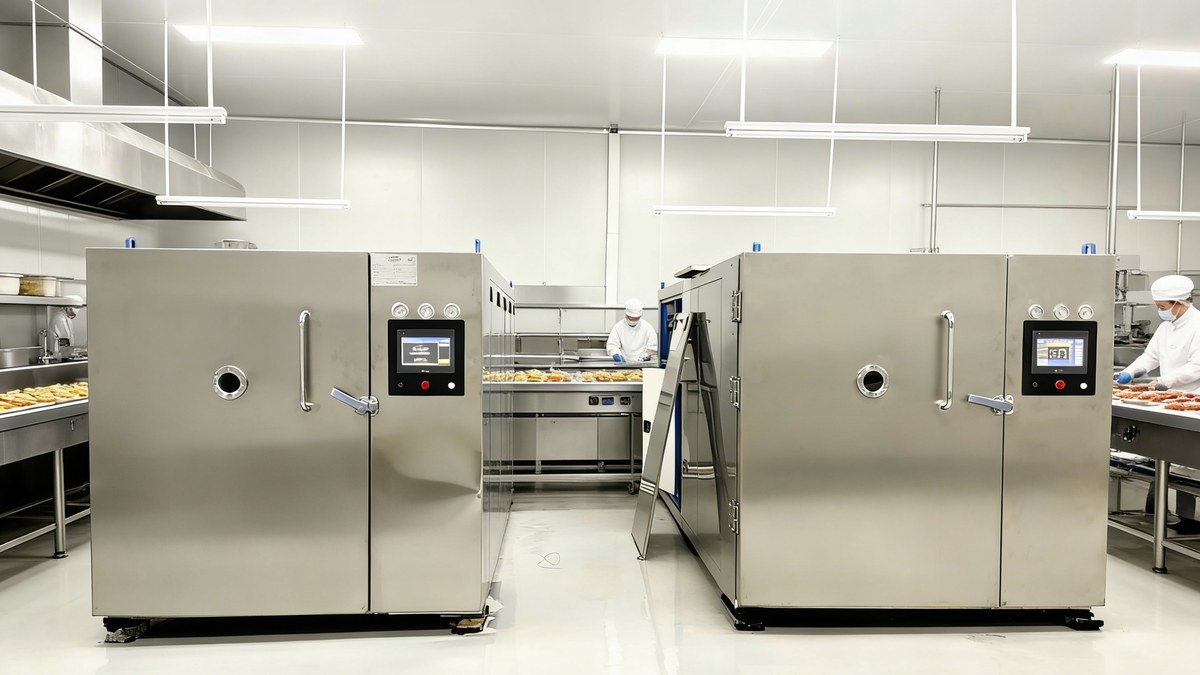
In 2024, a 10 m² freeze drying system was delivered to a Yunnan pharmaceutical company specializing in ginseng and cordyceps processing:
| Parameter | Specification |
|---|---|
| Drying area | 10 m² |
| Material | Ginseng, cordyceps, goji berries |
| Loading density | 9 kg/m² |
| Batch load | 90 kg fresh material |
| Cold trap temperature | -55°C |
| Ultimate vacuum | 12 Pa |
| Active compound retention | ≥90% (ginsenosides) |
| Rehydration rate | ≥90% within 5 min |
Summary
Freeze drying is the only scalable preservation method for thermally sensitive functional food ingredients. With the right engineering (deep cold traps, cascade refrigeration, pharmaceutical-grade construction), manufacturers can deliver products that actually retain their labelled bioactive content.
Yuanxian Machinery Engineering Team | vacuum-fresh.com