Freeze-Dried Fruit vs Traditional Drying — 7 Key Technology Differences That Matter
The global dried fruit market is projected to reach USD 12.8 billion by 2030, but not all “dried fruit” is created equal. Two fundamentally different processes — freeze drying (lyophilization) and traditional hot-air drying — produce products that look the same on a retail shelf but differ dramatically in structure, nutrition, rehydration, and production economics.
This article compares both technologies across seven dimensions that matter to processors, investors, and quality-conscious buyers.
1. The Core Technology: Sublimation vs Evaporation
| Parameter | Traditional Hot-Air Drying | Freeze Drying (Lyophilization) |
|---|---|---|
| Drying mechanism | Evaporation — liquid water converted to vapor at 50–80°C | Sublimation — ice converted directly to vapor at −30°C to −50°C |
| Phase transition | Liquid → Vapor | Solid → Vapor (skips liquid phase entirely) |
| Product temperature during process | 50–80°C | −30°C to +40°C (below 0°C during primary drying) |
| Vacuum level | Atmospheric (no vacuum) | 10–100 Pa (high vacuum) |
Why it matters: Traditional drying uses heat to drive moisture out of the fruit, which collapses cell walls and shrinks the tissue. Freeze drying locks the fruit’s frozen structure in place and removes water without ever letting the cellular matrix collapse. The result is a product that retains its original shape and porous structure — like a rigid sponge waiting to be rehydrated.
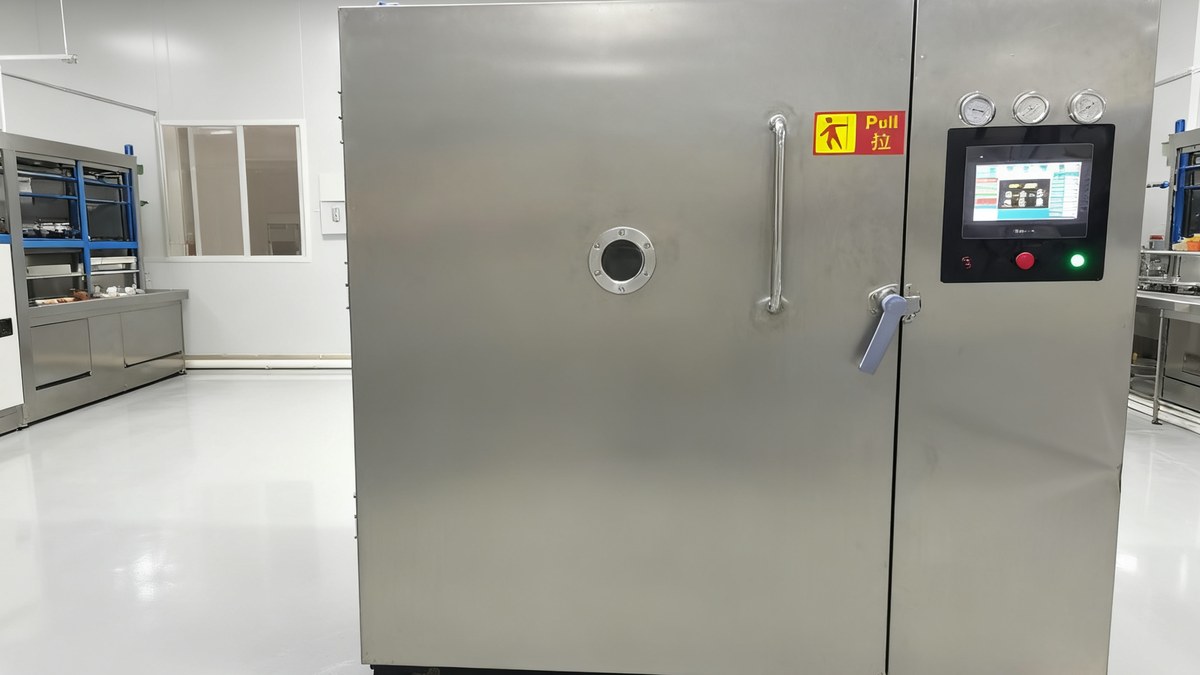
Freeze drying equipment such as the Yuanxian VFD Series achieves a working vacuum of ≤50 Pa within 8 minutes, enabling the sublimation process to begin almost immediately after loading.
2. Nutritional Retention — Heat-Sensitive Vitamins
The most frequently cited advantage of freeze drying is nutritional preservation, and the data supports it.
| Nutrient | Retention with Hot-Air Drying | Retention with Freeze Drying |
|---|---|---|
| Vitamin C | 10–40% | 80–95% |
| Vitamin B complex | 30–50% | 85–95% |
| Anthocyanins (berries) | 15–30% | 85–98% |
| Polyphenols / Antioxidants | 40–60% | 90–98% |
| Fiber | 100% | 100% |
| Natural sugars | No significant loss | No significant loss |
The mechanism: Vitamin C begins degrading at temperatures above 40°C. Lycopene degrades rapidly above 60°C. Freeze drying keeps the product below 0°C for most of the process — thermal degradation of heat-sensitive nutrients simply does not occur.
A 2023 study published in the Journal of Food Science and Technology comparing freeze-dried strawberries with hot-air-dried samples found that freeze-dried samples retained 6.2× more total phenolics and 4.8× more antioxidant capacity (DPPH assay) than their hot-air-dried counterparts.
3. Rehydration Performance — The “Sponge” Factor
This is where the two technologies diverge most dramatically in practical use.
Traditional drying: Hot air removes water from the surface inward. As moisture leaves, the cell walls collapse and the fruit shrinks. When rehydrated, the collapsed cells cannot reabsorb water to their original volume. Dried apricots, for example, regain only 50–60% of their original weight.
Freeze drying: The porous, sponge-like structure created by sublimation allows water to re-enter freely. Freeze-dried strawberries regain 90–95% of their original weight and shape within 2–3 minutes of immersion.
| Property | Hot-Air Dried | Freeze Dried |
|---|---|---|
| Rehydration ratio (weight) | 50–70% | 90–95% |
| Rehydration time | 10–30 minutes | 1–3 minutes |
| Shape retention after rehydration | Shriveled, shrunken | Nearly identical to fresh |
| Texture after rehydration | Chewy, leathery | Close to fresh texture |
This makes freeze-dried fruit the preferred choice for instant soups, breakfast cereals, camping meals, and any application where quick reconstitution is valued.
4. Texture and Sensory Profile
| Attribute | Hot-Air Dried Fruit | Freeze-Dried Fruit |
|---|---|---|
| Texture | Chewy, leathery, dense | Crispy, light, airy, crunchy |
| Shrinkage | 50–70% volume reduction | 5–15% volume reduction |
| Mouthfeel | Sticky, chewable | Dissolves quickly, “melt-in-mouth” |
| Color | Darkened, browning (Maillard reaction) | Retains original color of fresh fruit |
| Flavor concentration | Caramelized, cooked notes | Intense, fresh, “pure fruit” taste |
The light, crispy texture of freeze-dried fruit has created an entirely new product category — freeze-dried fruit snacks — that competes with both traditional dried fruit and candy. Consumer taste panels consistently rate freeze-dried fruit higher for “freshness of flavor” and “natural appearance.”
5. Production Economics — Speed, Yield, and Energy
| Parameter | Hot-Air Drying | Freeze Drying |
|---|---|---|
| Batch time (typical) | 8–24 hours | 18–36 hours |
| Energy consumption per kg water removed | 0.7–1.2 kWh/kg | 2.5–4.5 kWh/kg |
| Production floor area per ton output | Smaller (ambient pressure) | Larger (vacuum chambers + refrigeration) |
| Equipment CAPEX per ton capacity | Low to medium | 3–5× higher |
| Operating labor | Moderate | Moderate (automated cycles) |
The economics breakdown: Freeze drying costs 3–5× more per kilogram of finished product than hot-air drying. This is the single biggest barrier to adoption.
However, the cost gap narrows when measured per kilogram of nutrient retained or per kilogram of rehydrated product. A freeze-dried strawberry that retains 90% of its vitamin C delivers more nutritional value per dollar than a hot-air-dried berry that retained only 20%.
For commercial processors, the decision often comes down to product positioning — commodity dried fruit (hot air) vs premium freeze-dried ingredients or snacks.
6. Shelf Life and Storage
Both technologies produce shelf-stable products when properly packaged, but the mechanisms differ.
| Property | Hot-Air Dried | Freeze Dried |
|---|---|---|
| Shelf life (sealed, inert gas) | 12–24 months | 18–36 months |
| Critical storage factors | Moisture + light + oxygen | Oxygen (porous structure absorbs O₂) |
| Recommended packaging | Metallized film, vacuum or N₂ flush | FOIL + O₂ scavenger + N₂ flush |
| Moisture content (final) | 12–20% | 1–4% |
| Microbial risk at ambient | Low (Aᵥ < 0.7) | Very low (Aᵥ < 0.2) |
Freeze-dried fruit’s extremely low moisture content (1–4%) gives it a longer shelf life in terms of microbial stability. However, its porous structure means it reabsorbs moisture from the air quickly if packaging is compromised — making high-barrier packaging essential.
7. Product Applications by Technology
Hot-air dried fruit is best for:
- Bulk ingredients for baking, confectionery, and granola
- Price-sensitive commodity markets
- Products where chewy texture is desired (dried mango strips, apricots, dates)
- Fruit leathers and pastes
- Traditional dried fruit snacks
Freeze-dried fruit is best for:
- Premium ready-to-eat snack packs (crispy whole berries)
- Instant meal kits (camping, military, emergency rations)
- Breakfast cereals and yogurt toppings
- Nutritional supplements and powdered fruit ingredients
- Confectionery (chocolate-covered freeze-dried raspberries)
- Cosmetics and pharmaceutical excipients
- Baby food ingredients (reconstitutable powders)
Head-to-Head Comparison Summary
| Dimension | Hot-Air Drying | Freeze Drying |
|---|---|---|
| Operating principle | Evaporation at 50–80°C | Sublimation under vacuum at low temp |
| Nutrient retention (vitamins) | 10–60% | 80–98% |
| Rehydration rate | 50–70% weight recovery | 90–95% weight recovery |
| Texture | Chewy, leathery | Crispy, crunchy |
| Color retention | Darkened, browning | Original color preserved |
| Production cost per kg | Low | 3–5× higher |
| Shelf life | 12–24 months | 18–36 months |
| Best for | Bulk/commodity products | Premium/specialty products |
| Annual market growth rate (2024–2030) | 4.2% CAGR | 8.9% CAGR |
Which Technology Should You Choose?
There is no universal “better” technology — the right choice depends entirely on your product positioning:
- Choose hot-air drying when you need a commodity product at the lowest production cost, or when the application calls for a chewy, concentrated fruit texture.
- Choose freeze drying when you are targeting premium markets that value nutrient retention, crisp texture, instant rehydration, and visual appeal — and when your business model supports the higher production cost.
The market trend is clear: the freeze-dried fruit segment is growing at 8.9% CAGR (vs 4.2% for traditional dried fruit), driven by consumer demand for minimally processed, nutrient-dense snacks. As freeze drying equipment becomes more energy-efficient and production scales increase, the cost gap will continue to narrow.
Whether you are expanding an existing drying line or entering the freeze-dried fruit category for the first time, understanding these seven technology differences is the foundation of a sound investment decision.
Data sources: Journal of Food Science and Technology (2023); USDA FoodData Central; Yuanxian Mechanical VFD Series field operating records, 2022–2026. Actual performance varies by fruit type, batch size, and equipment configuration. For process simulation tailored to your specific product, contact our technical team.
This article is part of our Technology Comparison series. Learn more about freeze drying technology →