The Hidden Weak Link in the Cold Chain
Everyone in cold chain focuses on one number: storage temperature. Frozen at -18°C. Chilled at 0-4°C. Standard, agreed, no debate.
The problem is what happens before that temperature is reached.
The cold chain doesn’t start when the cold room door closes. It starts when product leaves the production line — 90°C cooked food, braised meat, baked goods — sitting there waiting to cool. The hours between 90°C and 10°C is a gap most cold chain plans ignore entirely.
That’s the cooling gap.
Why the 90°C → 10°C Window Matters
Microbiology is clear: bacteria multiply fastest between 60°C and 10°C. Every extra minute in this zone adds microbial load. Subsequent cold storage only slows deterioration — it cannot reverse what has already happened.
Most factories today:
- Product exits oven/steamer at 90°C
- Sits on racks “naturally cooling” — 3 to 6 hours
- Core temp finally reaches 10°C late at night
- Then moved into 4°C cold storage
By then bacteria have multiplied several generations. Shelf life drops from 7 days to 3 days. The cold room is just “preserving” already compromised product.
Vacuum cooling completely changes this timeline.
How Vacuum Cooling Fills the Cooling Gap
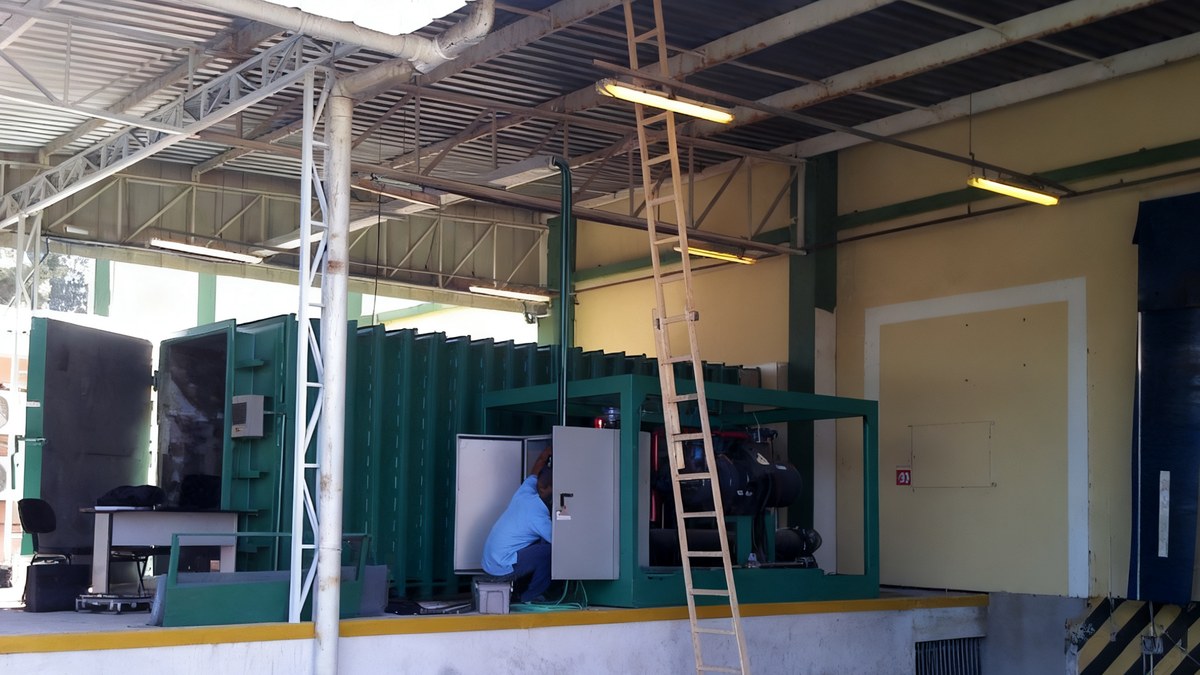
Vacuum cooling doesn’t use cold air or cold surfaces. It uses pressure reduction to make water boil at low temperature, directly removing heat from the product.
The vacuum system pulls chamber pressure to ≤600 Pa. At this pressure, water’s boiling point is below the product temperature. Water on and inside the product “boils” at low temperature, removing ~2,500 kJ per kg of water evaporated.
Result: A CVF-300 food vacuum cooler takes 300 kg from 90°C core to 10°C in just 10-15 minutes. Not hours — minutes.
Three Ways Rapid Cooling Changes the Cold Chain
1. Shelf Life Transformation
A Guangdong central kitchen switched from blast chiller to vacuum cooling:
| Metric | Blast Chiller | Vacuum Cooler (CVF-200) |
|---|---|---|
| 90→10°C time | 120 min | 12 min |
| Weight loss | 6.5% | 2.0% |
| Shelf life (sealed 4°C) | 5 days | 12 days |
| Complaints per 1000 | 7 | 1 |
2. Cold Room Space Doubled
A vacuum cooler processes 300 kg in ~20 minutes total cycle. Same 300 kg naturally cooling occupies floor space for 4 hours.
After adding vacuum cooling, the cold room freed ~40% of space previously occupied by “cooling-in-progress” product.
3. HACCP Compliance
HACCP requires documented time-temperature control. Cooked food must pass from 60°C to below 10°C within 6 hours (FDA Food Code, EU 852/2004).
Vacuum cooling passes through this zone in the first 15 minutes, with every batch temperature-recorded and traceable.
Summary
A cold chain that only focuses on storage temperature is only half done. The cooling gap — the window from production temperature to cold storage temperature — is the real battleground for food safety, quality, and shelf life.
Vacuum cooling makes the first step of the cold chain as efficient and controllable as every other link.
Yuanxian Machinery | vacuum-fresh.com